
Kent-based Blue Origin’s New Glenn launch ‘a big deal’
Published 12:31 pm Friday, November 14, 2025
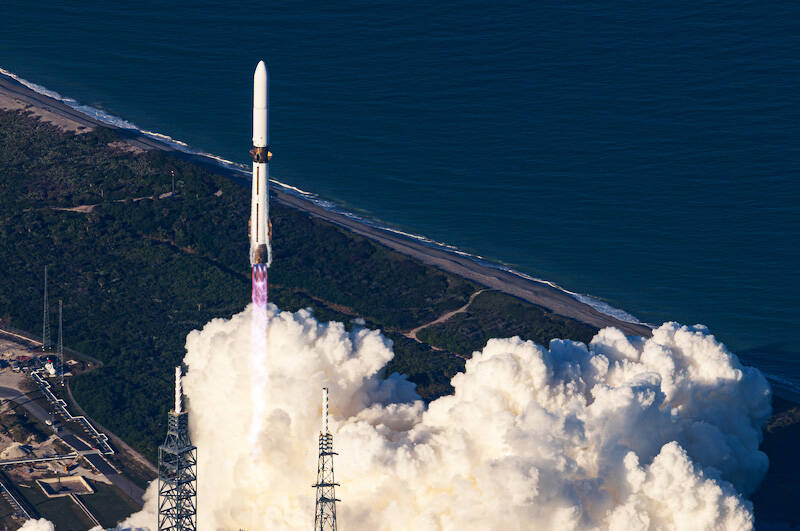
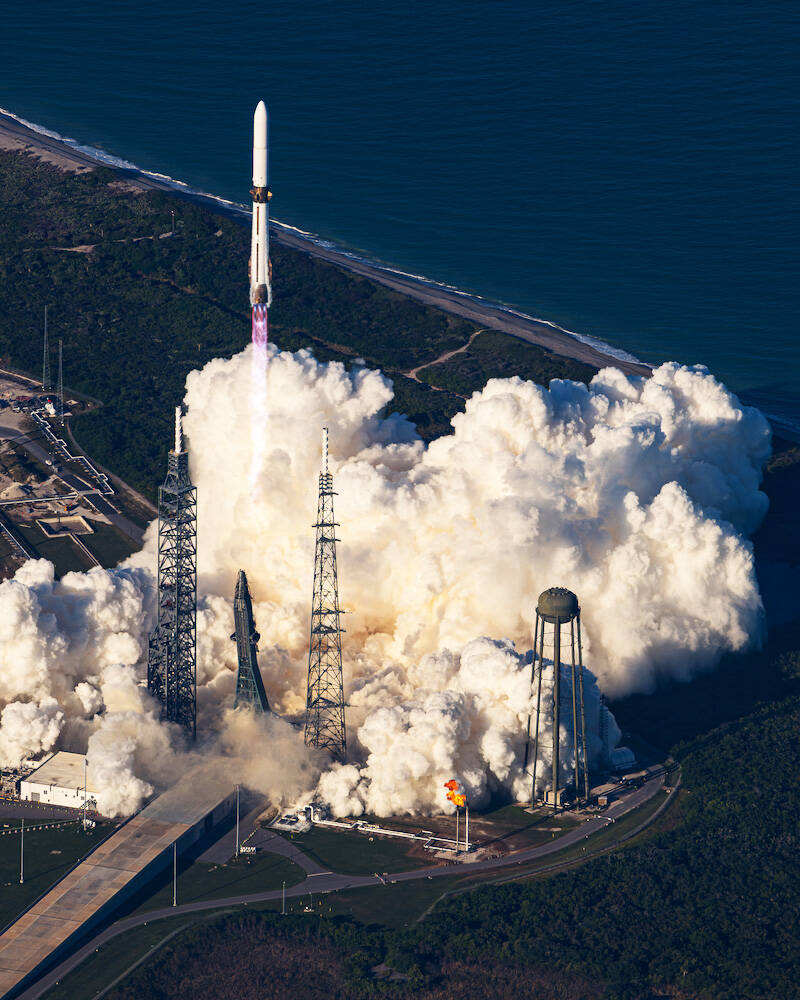
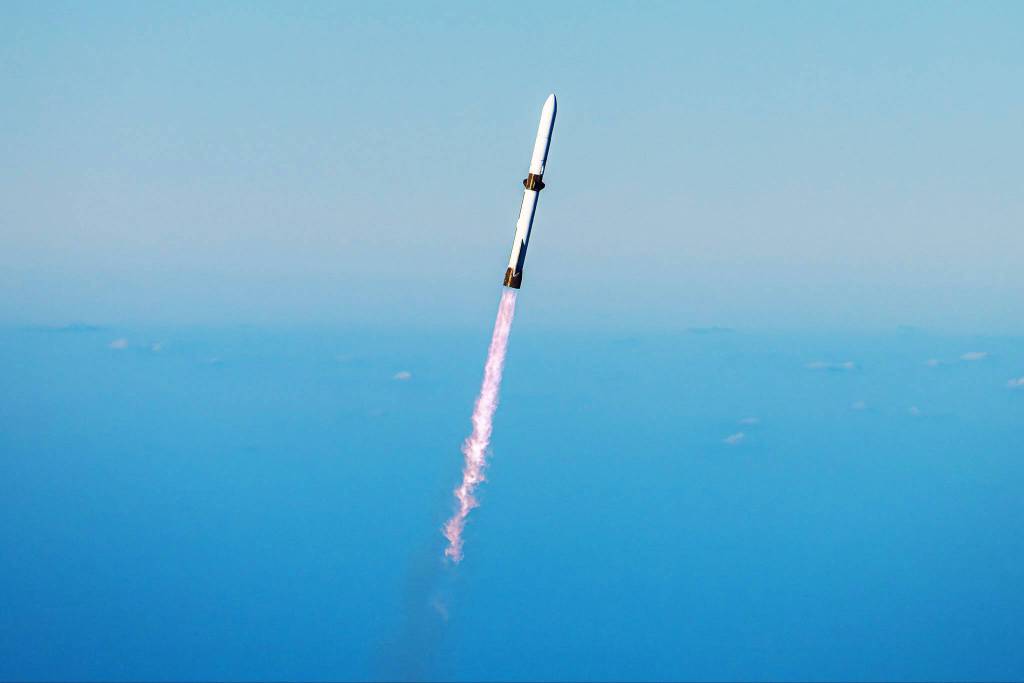




Reports from space news websites across the nation show what “a big deal” and “historic” achievement Kent-based Blue Origin accomplished with its New Glenn rocket launch on Nov. 13 from Cape Canaveral Space Force Station in Florida.
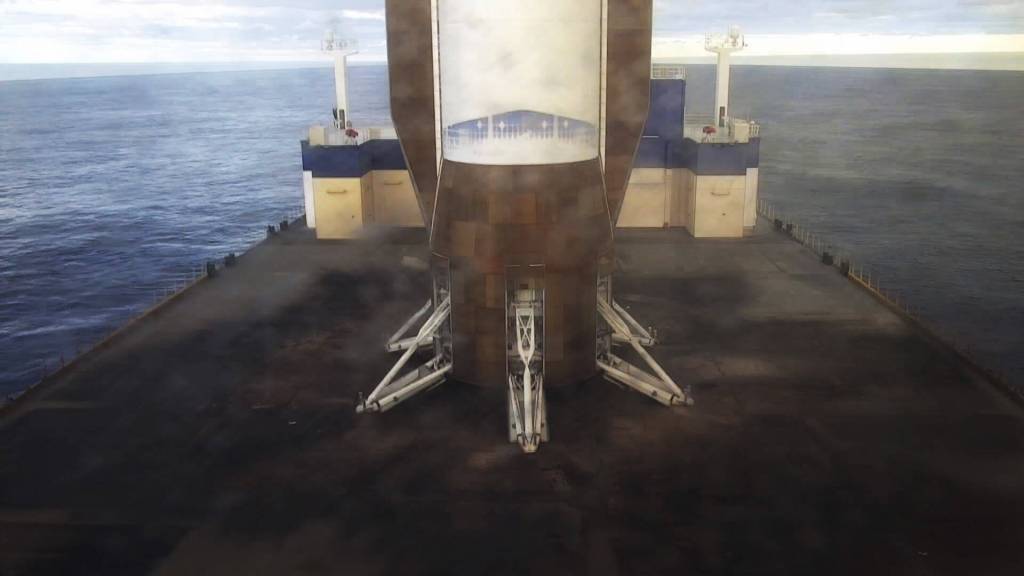
The New Glenn orbital launch vehicle successfully completed its second mission, successfully deploying NASA’s Escape and Plasma Acceleration and Dynamics Explorers (ESCAPADE) twin-spacecraft into the designated loiter orbit, and landing the fully reusable first stage on recovery ship Jacklyn in the Atlantic Ocean, according to a Blue Origin media release.
“We achieved full mission success today (Nov. 13), and I am so proud of the team,” said Blue Origin CEO Dave Limp. “It turns out Never Tell Me The Odds had perfect odds—never before in history has a booster this large nailed the landing on the second try. This is just the beginning as we rapidly scale our flight cadence and continue delivering for our customers.”
The ESCAPADE spacecraft will begin their journey to Mars once the planets have returned to the ideal alignment in fall 2026, according to Blue Origin. ESCAPADE will use two identical spacecraft to investigate how the solar wind interacts with Mars’ magnetic environment and how this interaction drives the planet’s atmospheric escape.
Amazon owner Jeff Bezos opened Blue Origin in Kent in 2000.
A headline on a space.com article by Mike Wall called it “5 reasons why Blue Origin’s New Glenn Mars launch was a big deal.” According to the article, “It was a big moment for NASA, for planetary scientists and for private spaceflight.”
An abbreviated version of the reasons included:
• 1. The first Mars launch in more than five years
Though NASA has explored the Red Planet extensively over the past few decades, launches to the fourth planet from the sun remain relatively rare, according to space.com. The last such liftoff occurred on July 30, 2020.
Each of the two ESCAPADE spacecraft carries the same four science instruments, which the probes will use to study how Mars’ magnetic environment interacts with the solar wind, the stream of charged particles flowing continuously from the sun. The mission’s data should help scientists better understand how the Red Planet lost its thick atmosphere long ago, NASA officials have said.
• 2. A new trajectory to the Red Planet
Earth and Mars align properly for interplanetary launches just once every 26 months, so Red Planet probes tend to fly in mini-waves, according to space.com.
But ESCAPADE is bucking that trend, as the next Mars launch window doesn’t open until late 2026. They’ll still hit it, in a way; the twin probes are headed to the sun-Earth Lagrange Point 2, a gravitationally stable spot about 930,000 miles from our planet. They’ll linger there for a year, studying space weather, until the Mars transfer window opens. Then, they’ll journey to the Red Planet after getting a speed-boosting “gravity assist” from Earth.
This novel trajectory could pave the way for greater exploration of Mars down the road, according to mission team members.
• 3. Rocket Lab’s first interplanetary mission
The two ESCAPADE probes — which are named Blue and Gold, the school colors of University California-Berkeley — were built by Rocket Lab, according to space.com. And that’s another important milestone: The California-based company had never been part of an interplanetary mission before.
• 4. The first operational New Glenn launch
New Glenn is the first orbital rocket developed by Blue Origin. The two-stage heavy lifter had just one flight under its belt before Nov. 13 — a test mission that lifted off in January, sending a prototype version of Blue Origin’s Blue Ring spacecraft platform to orbit.
Blue Origin has big plans for New Glenn, which stands 321 feet tall, can haul about 50 tons of payload to low Earth orbit and features a reusable first stage.
“The rocket is engineered with the safety and redundancy required to fly humans, and will enable our vision of building a road to space for the benefit of Earth,” the company wrote in a New Glenn description.
Proving that New Glenn can ace an operational mission, sending payloads on their desired trajectory into the final frontier, is an important step down that road.
So, Nov. 13 was a very big day for Blue Origin, according to space.com. And New Glenn was up to the challenge, acing its first-ever flight to feature customer payloads.
• 5. The first New Glenn rocket landing
Each New Glenn first stage is designed to fly at least 25 times, a feature that will make the rocket more affordable and more efficient. But such extensive reuse requires a pinpoint landing after each liftoff, which we’d never seen with the rocket — until Nov. 13, that is, according to space.com.
Blue Origin tried to bring New Glenn’s first stage down on its recovery ship — nicknamed Jacklyn, after Bezos’ mom — during the rocket’s debut flight in January, but the booster crashed into the sea. The company succeeded during the ESCAPADE launch, however, joining very rarefied air: Previously, only SpaceX, owned by Elon Musk, had managed to bring a booster down safely during an orbital launch.
SpaceX has done this more than 500 times with its Falcon 9 and Falcon Heavy rockets, so Blue Origin has some catching up to do. But it’s a very important start, according to space.com.
Blue Origin makes history
An article on dailygalaxy.com by Kouceila Rekik described how Blue Origin “made history by landing its massive New Glenn rocket for the first time after launching NASA’s ESCAPADE mission to Mars, marking a new era in reusable heavy-lift spaceflight.”
The article further described how “the achievement marks a turning point for both commercial spaceflight and interplanetary science, as private and government partnerships push deeper into the solar system. The mission opens a new chapter in the exploration of Mars—and in the race to reuse rockets at scale.”
Dailygalaxy.com also pointed out Blue Origin’s competition against SpaceX.
“This successful return signals a serious challenge to SpaceX’s Falcon Heavy dominance in the heavy-lift category,” according to the article. “While Blue Origin has long played catch-up in orbital capability, New Glenn’s recovery positions the company as a true contender in future lunar and Martian missions.”
The article described “Blue Origin’s successful booster landing is more than a technical triumph—it is a strategic victory in the evolving economy of space. The New Glenn’s recovery and refurbishment model could dramatically cut launch costs, enabling more frequent scientific and commercial missions beyond Earth orbit.”
In summary, dailygalaxy.com said for Blue Origin, the mission marks the culmination of years of testing and iteration, explaining how Bezos has long emphasized that building a “road to space” requires reliability and reusability.
“With New Glenn’s first stage now proven capable of returning intact, that road looks sturdier than ever,” according to the article.