Man who injured 5 in Kent Denny’s shooting out of prison
Published 2:15 pm Monday, January 19, 2026
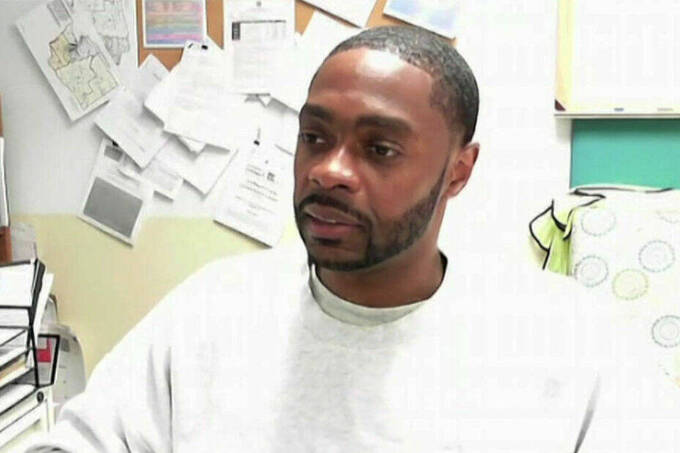
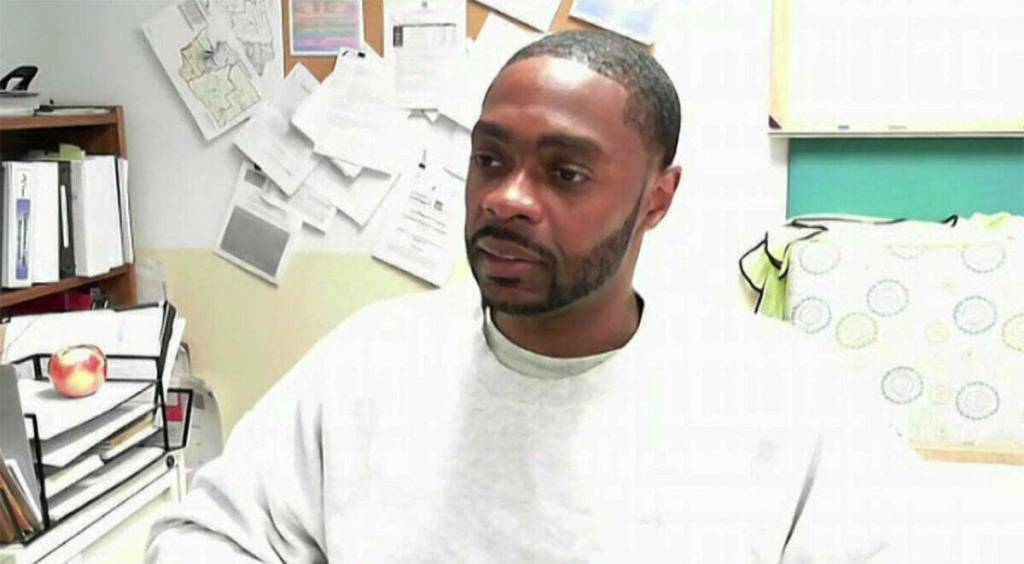


Nineteen years after shooting and injuring five people inside a Denny’s restaurant in Kent, Frank Evans III is out of prison.
Evans, 42, was released Jan. 10 because his sentence was commuted, according to the state Department of Corrections (DOC). Then-Gov. Jay Inslee granted Evans a conditional commutation in January 2025 during his final days in office after a September 2023 recommendation by the state Clemency and Pardons Board.
Inslee granted the Jan. 10, 2026 release of Evans by the state DOC, which reduced his 36-year sentence by 17 years. Inslee granted released of Evans to live with his brother in Kent. Evans still faces 36 months of DOC community supervision, according to documents.
Evans, age 23 at the time of the shooting, walked into Denny’s restaurant, 1246 Central Ave. N., shortly after 2 a.m. Jan. 27, 2007, intoxicated and demanded that a group of people immediately leave “his table,” according to court documents. After picking a fight, Evans left the restaurant and returned with a gun. Evans stepped in the door and fired off 11 rounds, injuring five people. Steven Tolenoa, struck by the gunfire, was left paralyzed from the neck down. He died in 2020 at age 41, months after contracting pneumonia.
The Kent Reporter reached out to Seattle attorney Jennifer Horwitz, the attorney who represented Evans during his request for early release, for comment from herself and Evans but did not receive a response.
A year ago, however, Evans did release a response through Horwitz to the Kent Reporter about Inslee’s decision to commute his sentence.
“Lives have forever been altered by the magnitude of my actions, and the victims of my crime, and everyone who was present for my crime, will continue to deal with them,” Evans said in January 2025. “I recognize how unfair that is to the people physically harmed and those mentally and emotionally affected by my actions. My actions were not provoked by anyone, nor was the situation escalated by anybody in the restaurant on the day of my crime or by any of the victims.”
A King County Superior Court jury convicted Evans, of Kent, of five counts of first-degree assault with five gun enhancements, and a judge sentenced him in 2008 to 63 years in prison. A King County judge reduced that sentence to 36 years in 2020 after a state Supreme Court decision about another case that requires a trial court to consider specific factors when sentencing a juvenile (or young) offender, including immaturity, impetuosity and the impact of familial and peer pressures.
An attorney representing Tolenoa and two other shooting victims reached a $13 million settlement with Denny’s parent company in 2011 after filing a lawsuit in King County Superior Court that the restaurant didn’t do enough to protect its customers during late-night bar rushes when unruly people came there to eat and often caused trouble, according to a 2011 Kent Reporter article. Most of that money went to Tolenoa, who was paralyzed from the chest down, the result of two shots to his body at the restaurant where he was an early-morning customer about to eat a Grand Slam breakfast.
“I am truly sorry for what I did to everyone directly affected by my crime and the people who love them,” Evans said. “I cannot express that enough. I don’t expect my victims to forgive me for what I have done. The lasting damage I caused to innocent people is what I will have to live with for the rest of my life – and it is fair that I have to carry that with me until I die.”
The King County Prosecuting Attorney’s Office opposed Evans petition for early release, saying it does not see “extraordinary circumstances” that warrant commutation. The Kent Police Department also opposed commutation as did a woman who was in the restaurant during the shooting and testified at his trial, saying Evans should remain in prison to pay his debt to the people he harmed.
“Gov. Inslee takes his clemency and pardon power very seriously and uses it rarely only after careful and thorough consideration,” Kathryn Leathers, then-general counsel for the governor’s office, wrote in a January 2025 email provided to the Kent Reporter as she announced Inslee’s decision. “He has placed his faith in Mr. Evans that he will dedicate himself to living an exemplary life and remaining trouble-free. By granting this extremely rare relief, the Governor’s Office encourages Mr. Evans to realize his aspirations and to never again commit a crime.”
Evans said in a statement last year to the Kent Reporter how much he appreciated the decisions by Inslee and the state Clemency and Pardons Board.
“I am incredibly grateful to the governor, the entire clemency board and the numerous of people who were, and continue to be, involved in the clemency process on my case,” Evans said. “What I am most grateful for, honestly, is that, despite the awful nature of my crime, some people were able to see that I had grown since committing my crime. The governor’s decision to commute a large portion of my sentence shows me that he believes I have undergone a personal transformation and that he has confidence that I will now impact our communities in a positive way.”
Evans served time at Stafford Creek Corrections Center in Aberdeen and previously at the Washington State Penitentiary in Walla Walla, according to state DOC records.
Evans explained how he turned around his life.
“I came into prison as a 23- year-old immature boy,” Evans said. “I initially received a 63-year sentence that truly felt like a life sentence to me at the time it was imposed. I had nothing to look forward to but a prison cell for the rest of my life. Initially, I felt that going to prison took my life.
“But, the reality was that being in prison actually gave me life. I was faced with a choice: either to continue down the same path that led me to prison or create a new path for myself. I chose the new path, even though I knew it would not be easy. I had some hard and honest conversations with myself, identifying the wrong choices and options I picked. This was largely a result of the negative environments I grew up under, although that is not an excuse for what I did, and never will be. I came to some realizations that made it so much easier to separate myself from that life.”
Evans said he read a lot in prison.
“I began reading self-help books and applying what I learned to my daily life,” Evans said. “What I learned from those books changed how I processed things. My attitude and energy were becoming more and more positive because I felt like I was living my life for me now and not others. I was choosing to do things that aligned with my new mindset, values and outlook on life. I decided to diffuse situations instead of escalating them, I looked for safer options other than violence in situations that could have turned violent.
“In doing so, I became a leader and someone others began turning to for advice. Other inmates noticed how I conducted myself and I became a model for others that wanted to grow in the same way. To me being an example for others was conformation I was growing and evolving into a new person. I was happy with the man I was transforming into, but I wished I had learned to be this new man before coming to prison. Since I could not go back in time, the next best thing to do was to share my new way of thinking with others and lead by example.”
Evans said at hearing before the Clemency and Parole Board that when he gets released he hopes to help local youth in trouble.
“I want to be a positive influence and work with youth and prevent them to do what I did,” he said. “All of you who do not want to see me released, I understand that. I want to show I can impact the community in a positive way.”