
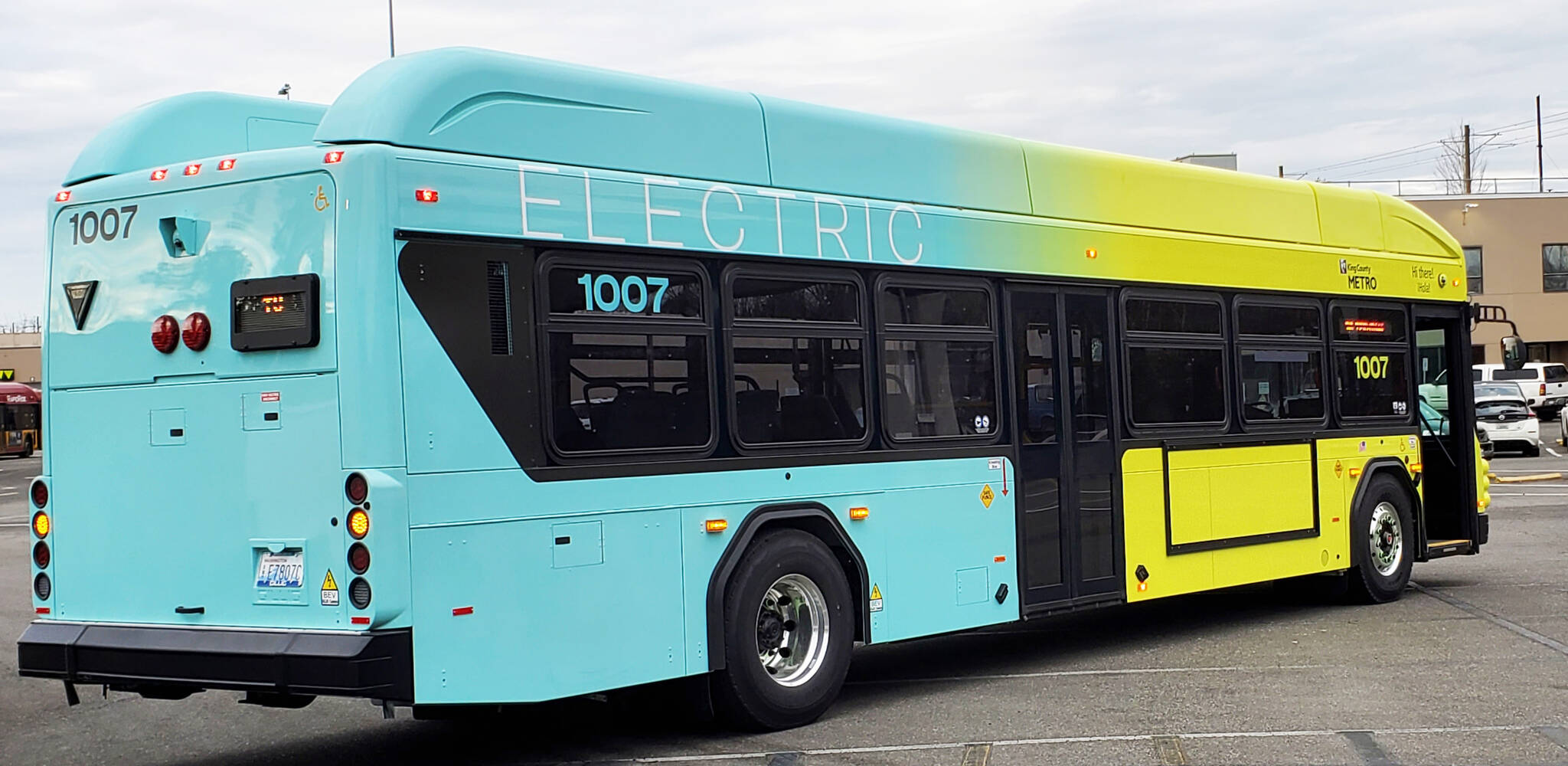
King County Metro is launching a new fleet of battery-electric buses that the agency says will enhance transit operator safety, reduce harmful emissions and prioritize deployment in South King County communities disproportionately affected by air pollution.
Kent, Renton and Auburn will each see the new yellow and seafoam blue buses along routes. Ten buses start service on Feb. 2, but many more are on the way.
Metro signed a $111 million contract with Livermore, California-based GILLIG for 89 battery-electric buses, according to a Metro spokesperson. Metro has received 46 buses and 28 are available for service and will be brought on after testing.
Buses will operate select trips on routes 105 (Renton), 128 (Tukwila, Seattle), 161 (Kent, SeaTac, Burien), 165 (Auburn, Kent, Des Moines, Burien), 184 (Auburn), and eventually the RapidRide F Line (Renton, Tukwila, SeaTac, Burien).
Metro is prioritizing South King County routes for the initial deployment, where many communities experience higher-than-average levels of traffic-related air pollution. Deploying zero-emission buses in these neighborhoods supports healthier air quality while expanding access to cleaner transit options, according to Metro.
“Public transit is one of the most powerful ways we connect people to opportunity,” said King County Executive Girmay Zahilay. “Every day, our operators show up to help people get to work, get to school, and get where they need to go.”
The buses feature new operator safety partitions that are the first to enter service following commitments made after the December 2024 death of Metro operator Shawn Yim.
“For decades, King County Metro has been a leader in clean transit,” Zahilay said. “And while cleaner technology and cleaner air matter, progress is only possible if the people behind the wheel are safe and supported. As our operators show up for our communities, it’s our responsibility to show up for them by prioritizing safety improvements. We continue to honor the memory of Shawn Yim by taking operator safety seriously and ensuring our commitments show up in real, tangible ways. With this new fleet, we are doing exactly that.”
The operator safety partitions include a reinforced lower metal panel extending to the operator’s platform, along with a two-part sliding glass system. A larger, extendable glass panel provides increased coverage and visibility, while an additional polycarbonate panel extends to the ceiling for added protection.
The partition will remain closed at all times except when transit operators are assisting customers with mobility devices and meets industry safety standards for vehicle windows and operator compartments.
Equipped with larger batteries than Metro’s current battery-electric fleet, the new 40-foot buses will travel an estimated 240 to 280 miles on a single charge, according to the manufacturer, and carry up to 69 people, including the transit operator. Metro will monitor performance as the buses enter service and ramp up operations.
The new vehicles will join Metro’s existing fleet of 40 battery-electric buses. Charging will begin at Tukwila Base this spring, with service expanding as additional buses are delivered. Once complete, the base will support up to 120 battery-electric buses, serving tens of thousands of riders across South King County.
The GILLIG buses also debut Metro’s new exterior design, known as “The New Energy,” a bright, modern look that reflects the agency’s transition to a zero-emission fleet and a more sustainable future for public transportation, according to Metro.
Talk to us
Please share your story tips by emailing editor@kentreporter.com.
To share your opinion for publication, submit a letter through our website https://www.kentreporter.com/submit-letter/. Include your name, address and daytime phone number. (We’ll only publish your name and hometown.) Please keep letters to 300 words or less.
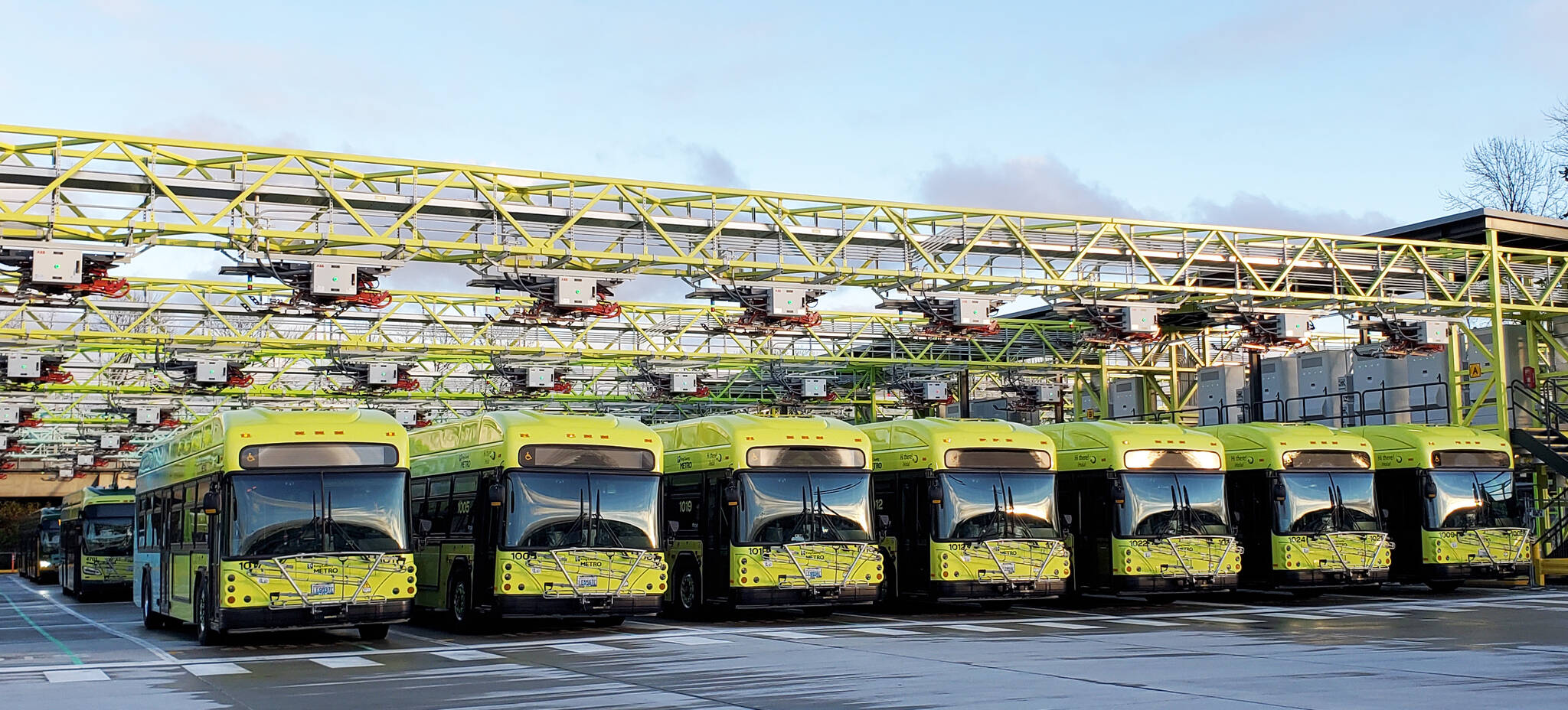
Metro signed a $111 million contract with Livermore, California-based GILLIG for 89 battery-electric buses. COURTESY PHOTO, Metro
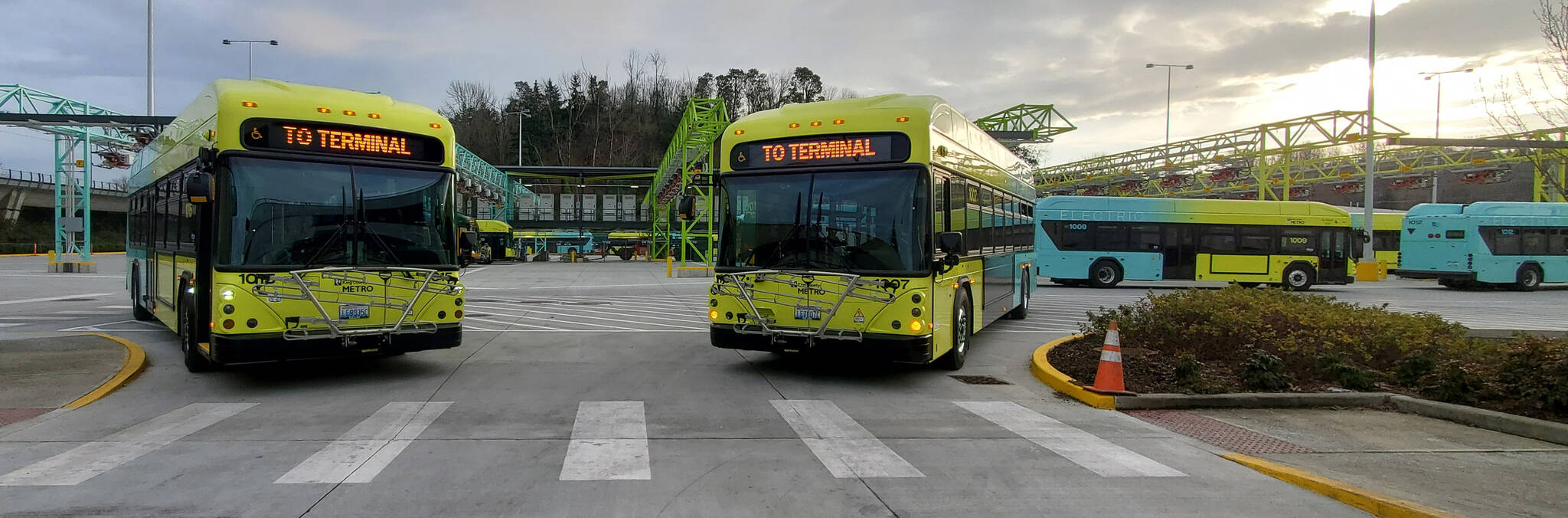
Routes in Kent, Auburn and Renton will be among the cities featuring the new battery-electric buses. COURTESY PHOTO, Metro
