
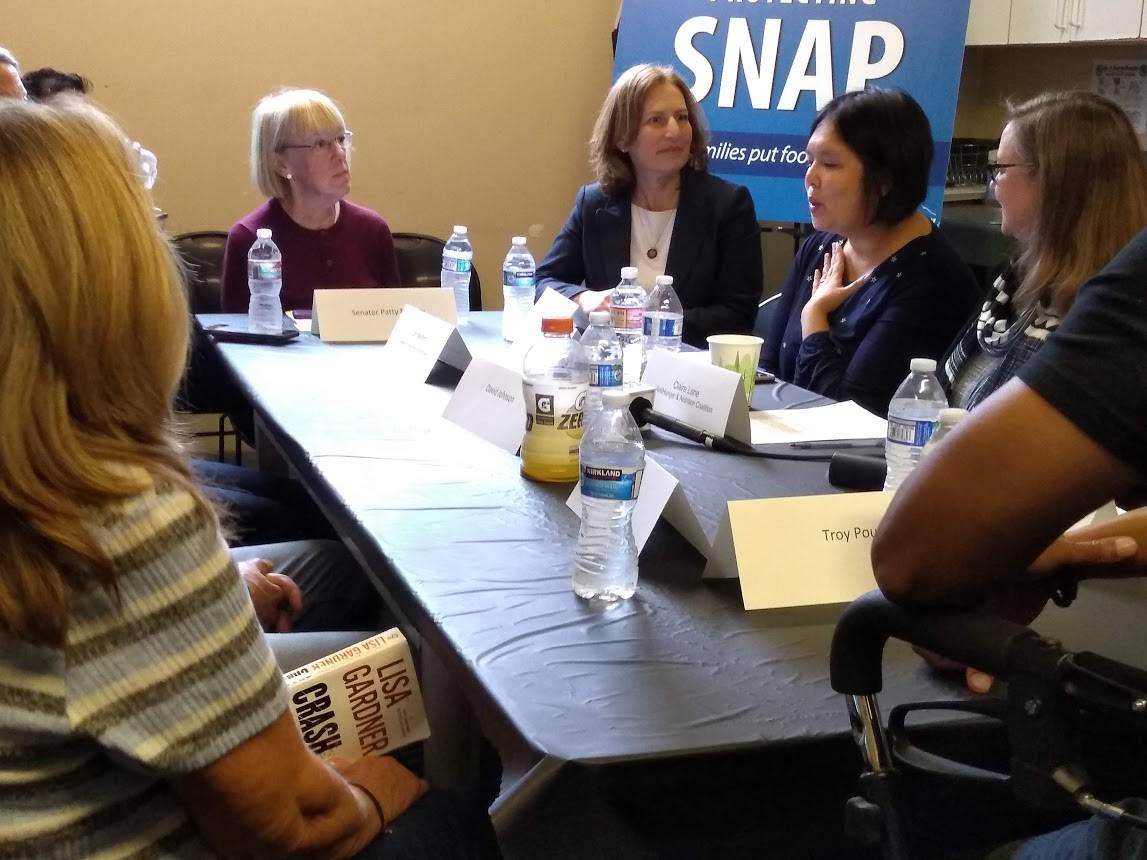
The Trump administration is pushing to reduce the number of people eligible for federal food assistance, which is worrying local service providers who say those restrictions would strain their ability to adequately feed people.
In July, the White House proposed making people whose gross income is greater than 130% of the federal poverty line ineligible for food stamps, or SNAP benefits. On top of this, those who have more than $2,250 in assets wouldn’t qualify either. Several other restrictions have been proposed over the past year by the Trump administration, including increased work requirements and directing immigration officers to consider whether someone seeking a green card is using SNAP.
The cumulative effect of these would be to kick millions of people off food assistance across the country. In Washington state, Sen. Patty Murray’s office issued a statement saying if the rule changes are approved it would cut off benefits for more than 60,000 children and 15,000 of the elderly. It could ultimately force more than 175,000 state residents off the program. The White House estimated that more than 3 million people in the U.S. would lose SNAP benefits.
“We have been fighting back against these changes,” Murray said at a roundtable Oct. 3 at the Issaquah Food and Clothing Bank, which provides food for hundreds of families.
The roundtable was also attended by U.S. Rep. Kim Schrier (D-District 8) as well as food advocates and some who have used SNAP as well as the food bank.
Christina Wong, public policy director of Northwest Harvest, said the rule changes could hurt service providers.
“We count on SNAP as a first line of defense,” Wong said.
She described the various proposed rule changes as “harmful and mean-spirited,” arguing they did nothing to address the underlying causes of hunger.
Aliya Haq, a nutritionist with International Community Health Services, said the impact will be felt especially hard in immigrant communities that would be forced to choose between providing food and running afoul of immigration authorities. This could manifest in an increased risk for malnutrition, infant mortality and emergency room trips. She said one of her patients with diabetes recently asked her how to eat a healthy diet with even more limited resources. It was a question Raq said she had to think hard about, even with two decades of experience.
“We are going to see a huge effect,” Raq said. “A huge disenrollment.”
Troy Pounds was also at the meeting. Pounds is a veteran and uses federal disability benefits as well as SNAP. While his percentage of SNAP benefits has been reducing, he said it’s still an important part of his finances. He was also worried about others.
“Above and beyond myself, I think SNAP is valuable to a lot of other people,” he said. “It at least needs to stay intact with where it is right now.”
Others at the meeting talked about how health issues also kept them from working and needing assistance securing food.
The federal poverty level is about $12,490 for one person, far less than the 2017 self-sufficiency standard proposed of more than $27,200 in Seattle and more than $33,600 on the Eastside. This disconnect between who is eligible for benefits and the reality of living in an expensive region can leave many people struggling to pay for basic necessities.
In 2017, according to the Center on Budget and Policy Priorities, there were roughly 929,000 residents using SNAP, around 13 percent of the population. Nearly 60 percent of SNAP participants were part of families with children, and one-third were in families with members who were elderly or had disabilities. About 42 percent were part of working families.
The average monthly SNAP benefit per household member was $122, with the average benefit per person per meal being $1.34. Households with seniors or disabled people tended to receive less than other categories. The average household with children in 2017 received $359 each month.
“That is the job of the federal government, to make sure children don’t go hungry,” Schreir said.
The public comment period for the proposed changes was closed on Sept. 23. AntiHunger and Nutrition Coalition director Claire Lane said Washington residents had submitted more than 17,000 comments.
Both Murray and Schrier said they would continue fighting to preserve food benefits.
Talk to us
Please share your story tips by emailing editor@kentreporter.com.
To share your opinion for publication, submit a letter through our website https://www.kentreporter.com/submit-letter/. Include your name, address and daytime phone number. (We’ll only publish your name and hometown.) Please keep letters to 300 words or less.
