
It’s been two years since a regional task force on opiate addiction endorsed investing in facilities for drug users to consume narcotics under supervision, and roughly six months since the Seattle City Council budgeted $1.3 million for the project. In February, various potential models for the facility were floated by local officials, such as constructing a new building on government-owned property. But there has still yet to be any action.
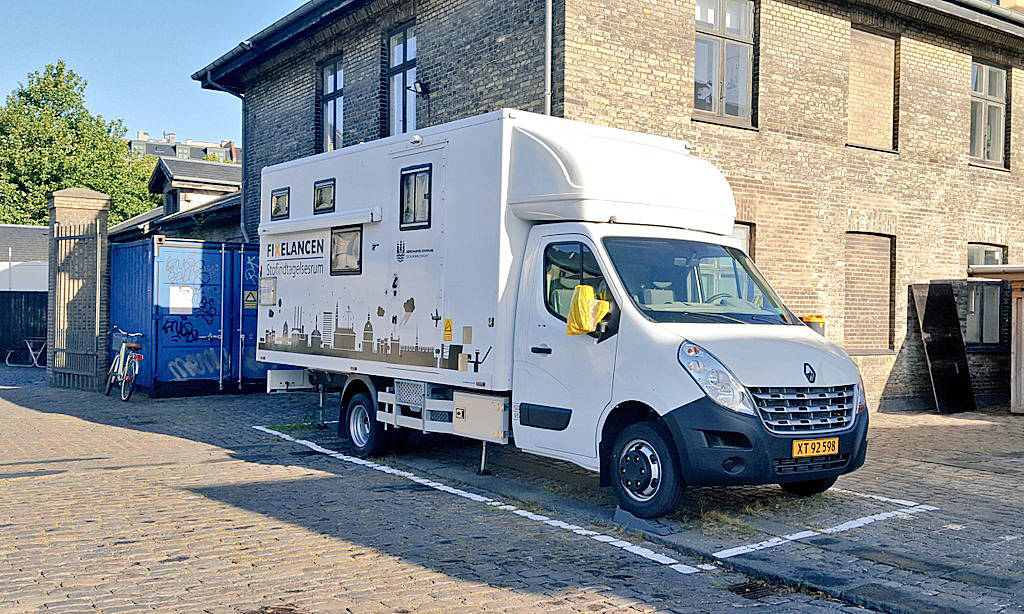
Now, officials from King County Public Health and the City of Seattle are indicating that they plan to pursue what they view as the most cost-effective option: outfitting a van (though this may be an official misnomer, as it would likely be a small bus) for drug consumption and parking it on a lot on a regular basis instead of having a permanent on-site facility. (Independent journalist Erica C. Barnett and Capitol Hill Seattle Blog had the news last week.)
The project has been pitched by proponents as a way to reduce public drug use and prevent overdose deaths amidst an escalating opioid epidemic—379 King County residents died from drug overdoses in 2017—by providing users with clean needles, trained on-site medical staff to administer overdose antidotes, and connect addicts to treatment and other social services. Safe consumption sites have long histories of success in Europe and Canada.
“When we began to look at the various options, we realized that the city doesn’t own a lot of buildings and the buildings that we do own are community centers and park related centers,” said Jeff Sakuma, a health integration strategist in Seattle Mayor Jenny Durkan’s office, at a June 7 Seattle City Council committee meeting. “We had kind of exhausted what we have looked at and determined that there wasn’t anything truly viable.”
At the meeting, Sakuma also cited steep property values and construction costs as another barrier to acquiring land and building a brand new facility. Additionally, he said that the city and King County isn’t eager to try and lease a privately owned space due to fears of federal intervention and property seizure. “We obviously are at risk of having somebody else’s property seized,” Sakuma noted. (In 2017, Republican state Senator Mark Miloscia wrote to U.S. Attorney General Jeff Sessions asking him to crack down on Seattle’s safe consumption site effort.)
So local officials now want a “fixed-mobile site.” They’d lease a lot where they would park a publicly owned van for consumption during daytime hours. Ideally, the lot would be adjacent to an existing space where patients could wait to enter the van or get connected to treatment services by on-site staff. King County Public Health spokesperson James Apa said in an email that they aim to staff the facility with between eight and 13 full-time employees.
The start-up cost estimate for the project is $1.8 million. However, ongoing funding for the theoretical facility’s annual operating expenses—such as staff pay—has not been identified.
Neither the county or the City of Seattle have a concrete timeline for getting the project up and running. “We understand the urgency with which we have to act but we don’t have a firm timeline,” Seattle Human Services Department spokesperson Meg Olberding told Seattle Weekly. “We’re still going through the work of going through the costs, and we’ll have to do community engagement.”
At the June 7 council meeting, Sakuma said that the project will still rely on the city finding someone who is willing to lease a lot for a safe consumption site. “The most important piece going forward is going to be finding a willing partner … who owns a piece of property,” he said.
Some Seattle City councilmembers are frustrated at the sluggish pace at which the project is moving. “We really need to have a timeline here,” Seattle City Councilmember Teresa Mosqueda said at last week’s meeting.
Advocates of safe consumption sites are supportive of the fixed-mobile unit idea, but argue that officials must invest in multiple sites in order to truly reach and impact the large swath of the regional drug-using population.
“Seattle is not unique in starting a safe consumption site program with a mobile unit—other European cities that now have fixed site locations started out smaller and in mobile units,” Patricia Sully, policy and legal services director at the Public Defender Association wrote in an email to Seattle Weekly. “Because safe consumption spaces generally serve only those within the immediate neighborhood and do not draw people from other neighborhoods, we ultimately will need a scatter-site model with supervised consumption services integrated into existing service provision locations. We need to provide these services where people are already going: at shelters, drop-in centers, syringe exchanges, and other places that serve people who use drugs.”
Daniel Otter, a nurse-care manager at Valley Cities Behavioral Health Care, told Seattle Weekly that the current proposal is “better than nothing,” adding, “One site is not going to have an impact on our overdose death rates.”
Regionally, the safe consumption project has met stiff opposition. While the opiate addiction task force recommendations from 2016 originally called for both a Seattle site and a at-large site elsewhere in King County, public health officials told Seattle Weekly back in April that they’ve temporarily suspended work on the county site—partially due to the backlash from suburban communities. Last year, the city councils of Bellevue, Auburn, Renton, and Federal Way voted to permanently ban such facilities. And in May of 2017, opponents filed a ballot initiative that would prevent municipalities from moving forward with safe injection sites. The initiative was struck down by a King County Superior Court judge, and has been appealed to the state Supreme Court, which is expected to rule on the issue in several months.
“The mobile unit is simply a pilot project to show that Seattle is not an exception to what studies from around the world have already shown—SCSs save lives, save money, and help connect people to health care services, including treatment,” Sully wrote. “It is where we start, not end.”
________
This story was first published in Seattle Weekly. Josh Kelety can be reached at jkelety@soundpublishing.com.
Talk to us
Please share your story tips by emailing editor@kentreporter.com.
To share your opinion for publication, submit a letter through our website https://www.kentreporter.com/submit-letter/. Include your name, address and daytime phone number. (We’ll only publish your name and hometown.) Please keep letters to 300 words or less.
