
Affordable housing is a frequent point of discussion, but how often does that conversation focus on affordability of purchasing housing rather than renting it?
On Nov. 18, the Federal Way City Council took a first step to explore a partnership with a local church to work on exactly that.
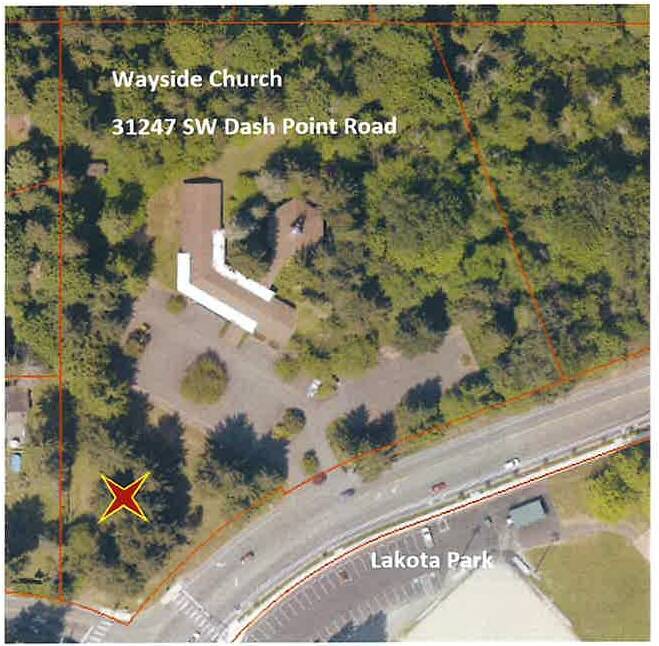
Specifically, the council approved the initiation of negotiations for a development agreement with Wayside United Church of Christ (UCC) for an unusual collaborative affordable housing project.
UCC shared in a letter that their congregation’s mission and purpose have guided their goal to “use a portion of our idle property to consider development of affordable housing.” The church is at 31247 SW Dash Point Road in Federal Way.
“To me this is groundbreaking. This is something that nobody else around this community in King County is doing,” Councilmember Jack Dovey said. “We are only at the starting blocks, but affordable housing for purchase is very, very important.”
UCC has made steps to work toward their goal of creating affordable housing, including hosting nonprofit organizations and professionals to assess the site, but so far “other pressing demands have made our progress slow.”
Separately, the Federal Way Land Use/Transportation Committee and Land Use Commission have been exploring the idea of partnering with local faith organizations to help them develop unused land into affordable housing.
The idea came from the city’s goals and needs around increasing housing supply and the necessity of creative strategies to accomplish those goals.
Some of that creativity has already been reflected in city laws as council members have updated permitting rules for middle housing options, such as a change to Accessory Dwelling Unit (ADU) policies this year.
“Everybody talks about affordable housing so people can rent something cheaper or less expensive. We need to get people to break away from those handcuffs that people have to rent for the rest of their years in an apartment,” Dovey said at the Nov. 18 meeting. “We need to make it so that people can buy houses in Federal Way that are affordable so that we can drive the economics in this community.”
The city has outlined the community’s need for the addition of approximately 11,260 new housing units by 2044, and a plan for how to do that, in their 62-page chapter on housing in the most recent Comprehensive Plan.
The plan describes how single-family housing units that are affordable for first-time homebuyers and seniors are one area that needs more housing stock.
This is exactly the type of housing that Dovey hopes can be bolstered by the type of partnership to be tested in the development agreement with UCC.
A development agreement will allow the city to have some control over the type of housing that gets built on the property, assuring that it aligns with the identified needs to “promote a diverse housing supply… encouraging and supporting a mixture of housing types … and providing opportunities that will assist in the development of affordable and special needs housing,” among other goals.
For the church, partnering with the city will give UCC access to expertise and professional support with the process of identifying a developer for the project, along with navigating the permitting and construction process, as well as the city’s guidance on building housing that the community needs the most.
As Dovey put it at a Land Use and Transportation Committee meeting on Nov. 3, “in the end, it’s not just a a win-win for the for the city, it’s also a win for the church, a win for the builder. The most important thing, it’s a win for the ultimate purchaser who’s actually able to buy a home at a reasonable cost.”
Once the properties are built, it will add new property tax revenue into the city’s budget and could even save the church on taxes as well.
While churches may be eligible for exemption from property taxes on a maximum of five acres in many situations, no more than one-third of an acre of unoccupied or undeveloped land can qualify for the property tax exemption.
Ten churches in Federal Way own over the five-acre maximum and an unknown number own more than the one-third of an acre maximum of undeveloped land, meaning they are most likely paying taxes on land they might not even be using.
There are 61 churches total within the city, and they collectively own 179.9 acres.
Many churches also have charitable missions, which like UCC, might include increasing access to housing in the city.
If the partnership with UCC works out well, this type of development agreement could become a blueprint for other similar projects in the city.
Talk to us
Please share your story tips by emailing editor@kentreporter.com.
To share your opinion for publication, submit a letter through our website https://www.kentreporter.com/submit-letter/. Include your name, address and daytime phone number. (We’ll only publish your name and hometown.) Please keep letters to 300 words or less.
