
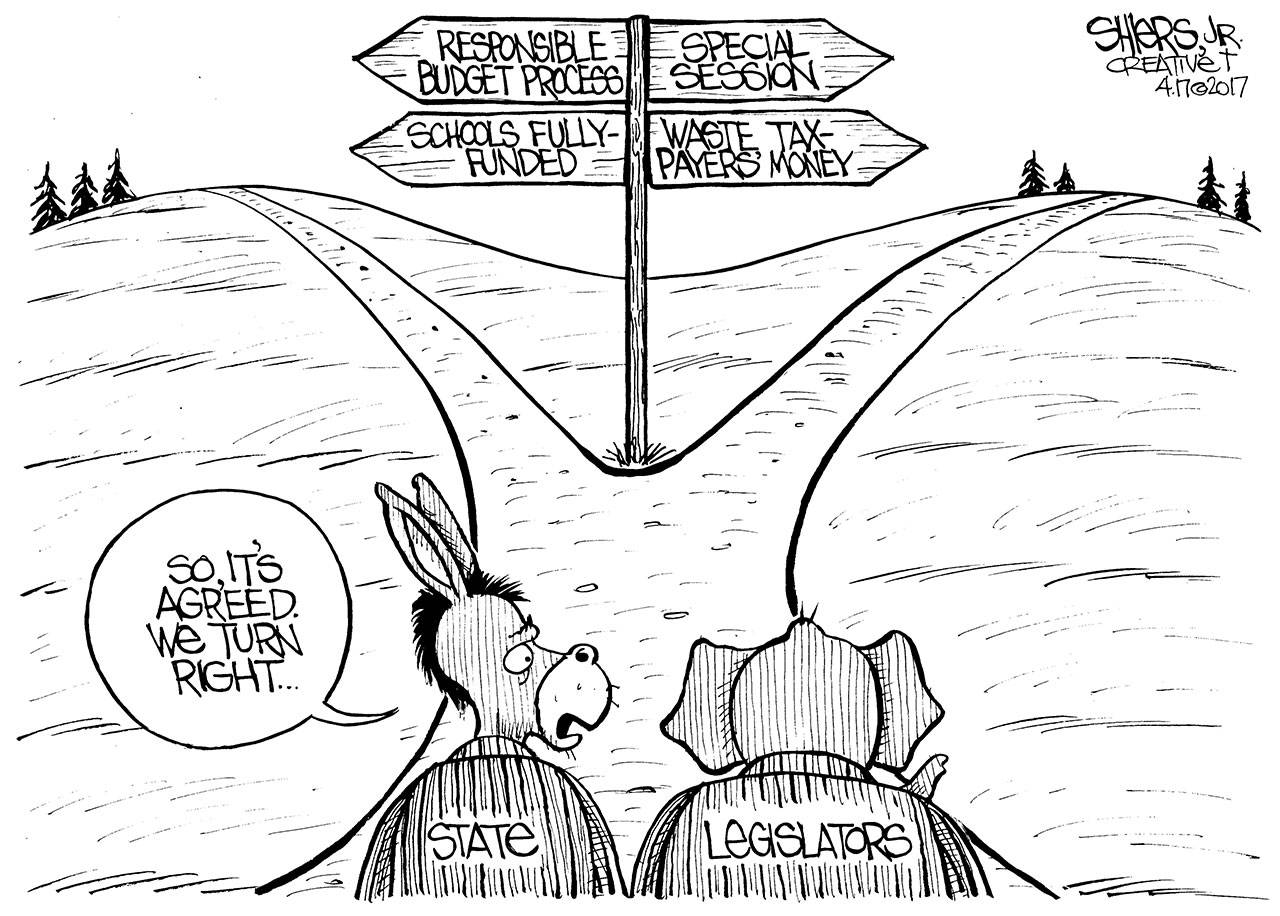
Washington voters amended the state constitution in 1979 in hopes of bringing discipline to a legislating process run amok.
Sixty percent of them passed Senate Joint Resolution 110 to establish a new requirement for annual legislative sessions of up to 105 consecutive days in odd-numbered years – when budgets are written – and 60 days in even-numbered ones. And it set a new limit of 30 days for any special legislative session.
By their action, voters ditched the constitution’s original language directing lawmakers to gather for 60-day sessions only in odd-numbered years. As for special sessions, the state’s founders didn’t pen any conditions on their length.
At that point, the experience of nearly 90 years as a state had shown 60 days to rarely be enough time for lawmakers to get their work done, inevitably leading to lengthy extra sessions. Voters recalled 1977 in which lawmakers followed up their two months of regular session with a 104-day overtime.
Supporters of the constitutional amendment vowed in the voters pamphlet it would “force the legislature to prepare the state budget and enact necessary laws within a fixed period of time each year.” They also claimed it would prevent “marathon” sessions, improve the quality of legislation and “provide for the orderly and systematic analysis of legislation.”
Thirty-eight years later, with the 2017 Legislature nearing the end of a second largely unproductive week of a second special session, the process of legislating looks out of control, again.
Discipline is lacking in regular sessions. Leaders of the majority parties in the House and Senate seem unwilling, or maybe unable, to enforce rules intended to deal with legislation in an orderly fashion, including the budget.
Every session contains deadlines, or cut-off days, by which bills must be acted upon or they die. But lawmakers largely ignore them and this year is no exception.
The last cut-off in this year’s regular session came on April 12, the 94th day. That’s when any policy bill needed to have cleared both chambers in some form or else it was toast. The idea was to clear the decks for lawmakers to focus on passing a budget and other bills considered Necessary to Implement the Budget, or NTIB in Olympiaspeak.
It was all supposed to happen by April 23, the 105th day. It didn’t, hence the overtimes.
Compounding the challenge is these days nothing seems to die. Every bill with a constituency – which is pretty much every bill given the army of lobbyists and special interests deployed in the Capitol – is considered either NTIB or its political sibling, NTPB, which stands for Necessary to Pass the Budget. These are bills a lawmaker wants considered before they’ll commit to voting on a budget.
This year for example, different groups of lawmakers are insisting action be taken to ease the pain of rising Sound Transit car tabs and to deal with restrictions on water rights imposed by the Supreme Court before they’ll commit to voting on a budget or school funding agreement. Their desires are not directly prolonging the process by themselves but they will need to be satisfied at some point.
This looks like the kind of situation voters expressly wanted to prevent when they acted in 1979. Is another reset needed or is Washington destined for legislative marathons every other year?
One idea — by no means a new one — is to keep sessions at 105 days but not count the days consecutively as required. Leave out weekends since lawmakers are rarely at their office working anyway.
Applying this scenario in 2017 would have meant the final cut-off fell on May 18, presumably enough time to resolve those sticky policy matters. The last day of regular session would be Friday, June 2.
Certainly this would extend the length of sessions on the calendar and carry increased costs.
Engaging lawmakers in legislating for a longer period of time might improve the quality and productiveness of their conversations, and the dynamics of a process that looks to be running amok, again.
Political reporter Jerry Cornfield’s blog, The Petri Dish, is at heraldnet.com. Contact him at 360-352-8623; jcornfield@heraldnet.com. Twitter: @dospueblos.
Talk to us
Please share your story tips by emailing editor@kentreporter.com.
To share your opinion for publication, submit a letter through our website https://www.kentreporter.com/submit-letter/. Include your name, address and daytime phone number. (We’ll only publish your name and hometown.) Please keep letters to 300 words or less.
