Viral video sparks harassment at child care businesses in Federal Way
Published 3:45 pm Wednesday, January 7, 2026



A viral video about fraud related to child care subsidies in Minnesota has sparked the harassment of day care operators in Federal Way over unsubstantiated claims of similar issues here.
Although detailed reports of the overpayments for child care subsidies that do occasionally occur are publicly available, two reporters not based in Federal Way visited home-based child care facilities in the city to demand access to young children on private property in late December 2025.
The Federal Way Police Department (FWPD) confirmed that “officers did respond to the address after the resident complained about people filming their residence while standing on the sidewalk,” and that “officers determined no crime occurred and closed out the incident.”
The journalists shared in their article and video related to their so-called investigation that they visited several other home-based child care facilities in an attempt to personally verify the existence of children.
Local parent Charmaine Dube shared on social media that the two individuals camped out at her child’s day care on Dec. 30 in Federal Way and scared her children when they “banged on the door trying to get in.” She later told the Federal Way Mirror newspaper that her son, who is autistic, was upset when he saw them yelling at the owner because “he loves her and enjoys going there.”
“I don’t care who you are, journalists or not, you have no right demanding to see my children or any of their records,” Dube shared in her post.
Later, Dube told the Mirror that as a domestic violence survivor who moved to Washington fleeing death threats and more, “so much has happened with my children and my biggest concern is keeping them safe.”
“These are my children. I don’t care about some fraud story or whatever it is,” Dube said. “My children were in that house, which is a registered business … now I’m worried about my child’s safety.”
When it comes to the recent harassment of child care facilities in Federal Way, District 30 State Sen. Claire Wilson told the Mirror: “I am all about rooting out fraud, just like my Republican colleagues … but that’s not what this is about.”
“We need to protect taxpayers, we need to prevent criminal activity, but we need to do it in a way that is not targeting groups of people who have done absolutely nothing, and to have people feel like they can video and just walk into people’s homes …it’s not good, it’s not safe,” Wilson added.
Attorney General Nick Brown released a statement on Dec. 30, stating that “my office has received outreach from members of the Somali community after reports of home-based day care providers being harassed and accused of fraud with little to no fact-checking.”
Brown added that “showing up on someone’s porch, threatening, or harassing them isn’t an investigation. Neither is filming minors who may be in the home. This is unsafe and potentially dangerous behavior.”
Brown also said there are appropriate measures to report and investigate potential fraud, and directs people to visit the website for the Department of Children, Youth and Families (DCYF): “And where fraud is substantiated and verified by law enforcement and regulatory agencies, people should be held accountable.”
The viral video referenced earlier was made in December by conservative YouTube creator Nick Shirley, and led to more allegations of social services fraud by Somali-American day care centers, although multiple news outlets cite a lack of evidence for the claims made in the video.
State laws and oversight
In-home child care providers are specifically exempt from sharing the private information of the vulnerable individuals they care for, according to state law (RCW 42.56.640).
Washington differs from other states in that early investments in oversight and monitoring were made early in the process, Wilson told the Mirror.
This began with the Early Start Act in 2011, which is part of the Early Achievers program, a quality rating improvement system that focuses on “accountability, our monitoring systems, our health and safety systems and everything that goes into making sure that children are safe in other people’s care, especially when the state is providing subsidies that pay for a partial amount of a child’s care.”
“As a state, we had made a decision long ago to start looking at quality and making sure that folks that provided care for kids had the systems in place, that we had monitoring in place before we opened the gates and said, bring children in…many states did not do that,” Wilson said.
As just one example of the rigor of these requirements, early learning providers in Washington state must keep detailed records of every child’s information and permissions and attendance records that detail the name of the child, date of care, child arrival and departure times, signature of the parent, staff signature, daily staff attendance records and ratios and more.
These records must be available for a minimum of five years, and the last 12 months must be available on-site for agency review. Child care centers are subject to unannounced visits by agency staff at least once a year, and all inspection documentation is easily available to the public online through the DCYF child care check site.
A report from DCYF shared that in 2024, the Child Care Subsidy Program (CCSP) Quality Assurance unit conducted approximately 1,440 annual audits of child care provider payments, covering licensed or certified child care centers, family child care homes, and license-exempt family, friend, and neighbor (FFN) caregivers serving subsidized families.
These audits verify provider billing against attendance records, according to the report, and additional audits are initiated by referrals from licensing or eligibility staff when billing discrepancies are identified.
Both the number of cases and the dollar value associated with those overpayment cases have gone down over the past five years, from 174 cases statewide in 2019 at a dollar value of $1.9 million, to 102 cases in 2024 at a dollar value of $1.4 million, according to DCYF. These numbers include both consumer and provider overpayments and do not include money that is recovered through administrative hearings.
Much more detailed information is easily available through that report.
For those who want to know more about Washington state’s child care accountability and monitoring systems, the Senate Early Learning and K-12 Education Committee is hosting a public hearing on Jan. 15 on the topic. The details of that meeting are not yet shared, but check back on the commitee’s website to watch it live or find it in the archive after the hearing.
Child care in Federal Way
The detailed oversight of child care in Washington state is also how it is possible to know that the city of Federal Way has been consistently categorized as an “extreme child care desert” for at least the last three years, according to reporting by DCYF.
Only 24.5% of eligible children are receiving any early care and education services in Federal Way zip code 98023, and 33.8% in zip code 98003, according to DCYF, as of September 2025.
The same data also found that this is a persistence issue, with these zip codes maintaining extreme child care desert status from August 2022 through September 2025.
Child care is a workforce issue, especially in challenging financial times where it is hard to live on one person’s income, Economic Development Director Meredith Neal told the Mirror.
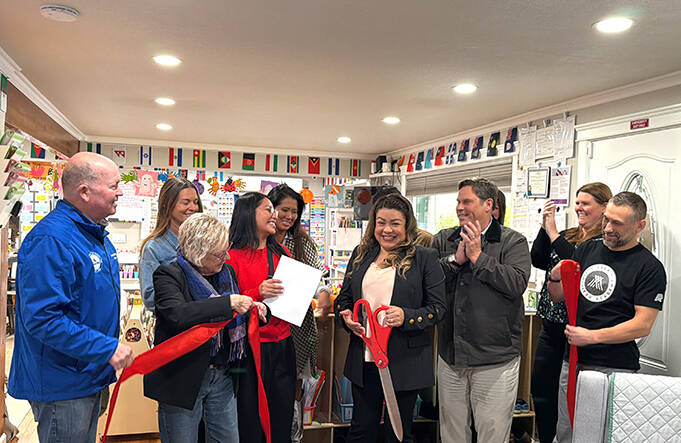
It is for this reason that the city of Federal Way recently decided to invest $80,000 in supporting three entrepreneurs who wanted to start new home-based child care facilities in the city.
“Child care is an economic development issue, and access to safe, affordable child care is something that I think the city felt really strongly about when they decided to fund this program, which came through ARPA (American Rescue Plan Act) funds,” Neal said, adding that the investment was about supporting three new entrepreneurs, but also about adding the 30 additional child care openings the new businesses would provide.
Putting funds toward opening these businesses “was basically the city’s way of guaranteeing that three would be selected and would open their businesses here in Federal Way, because they’re working all around the region,” Neal said.
When community members are reacting to national conversations about fraud right now, Neal said she wished people knew how much oversight there actually is with the funding she’s seen in her experience.
“So many of these programs that I’ve seen and am familiar with, whether it’s through community development block grants, or whether it’s through different funding, they have so much oversight that people don’t see,” Neal said.
“I know that fraud can happen in places. However, the level of oversight that most of these types of programs have means that it would be pretty hard, and part of that is because we want them to be successful too, you know, and we want to make sure that dollars invested from the city are going to help somebody be successful.”
Anyone experiencing threats or harassment is encouraged by the Attorney General’s office to either contact local law enforcement or the office’s Hate Crimes and Bias Incident Hotline at 855-225-1010 or www.atg.wa.gov/report-hate.