City of Auburn wants to buy Soos Creek Botanical Gardens
Published 4:10 pm Tuesday, December 2, 2025
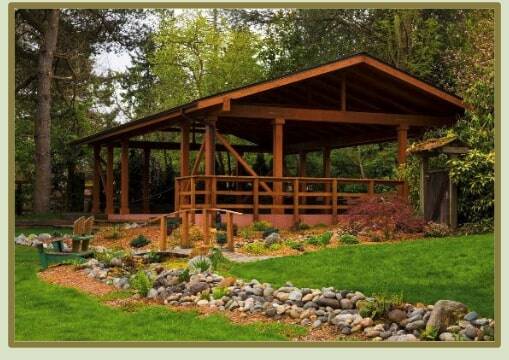



Soos Creek Botanical Gardens on Auburn’s Lea Hill seems to define the very notions of peace and harmony. It nurses among its meadows, woodlands, winding trail system and Pacific Northwest landscapes some unique plant life, rare perennials and a year-round creek.
At the Auburn City Council study session on Nov. 24, Thaniel Gouk, Auburn Parks, Arts and Recreation Planning and Development Manager, described the project and how the city plans to purchase the 23-acre garden, 29308 132nd Ave. SE, from its owner, Maurice Skagen.
Gouk said the city will use a $2.1 million King County Conservation Futures Tax grant (CFT) intended to preserve green, open spaces in the county. Gouk said the grant fund makes money available to cities and King County itself for this purpose. The grant funds will become available at the beginning of 2026, and they do not require matching funds from the city.
City leaders were enthusiastic.
“This is an incredible opportunity for the city to expand its green space and the amenities available to our residents,” said Councilmember Kate Baldwin.
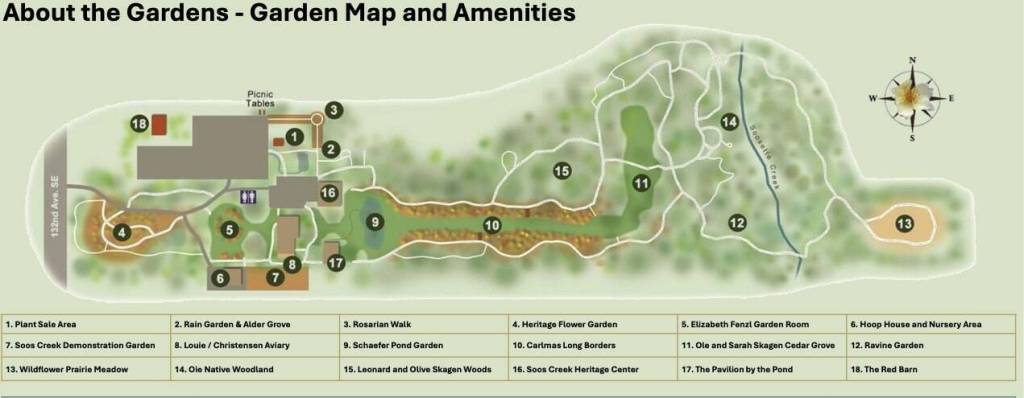
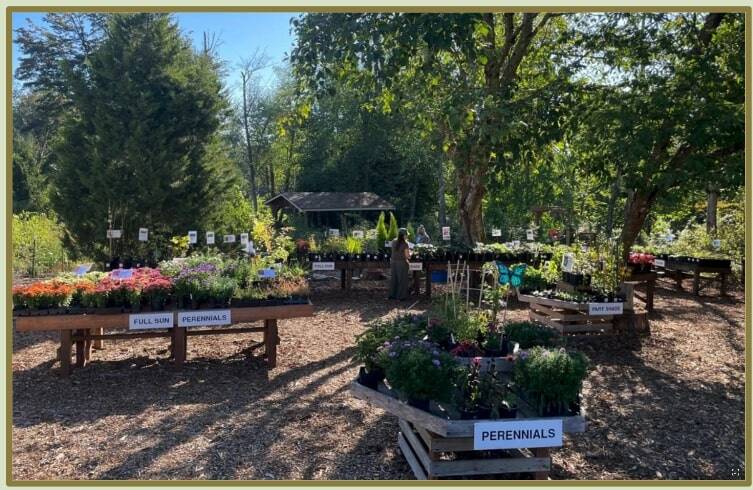
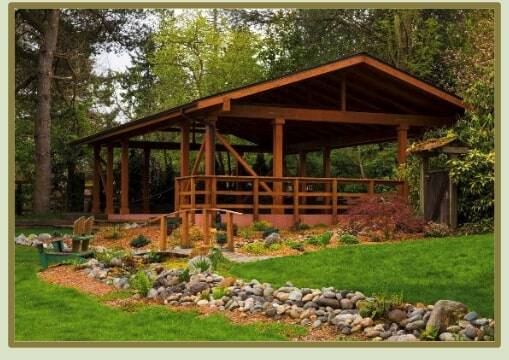
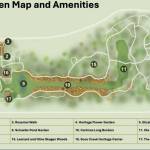
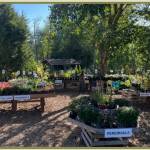
The site includes a plant sale area, a rain garden and the Ole and Sarah Skagen Alder Grove, in addition to the Heritage Flower Garden, the Elizabeth Fenzl Garden Room, the Hoop House and Nursery area, and the Soos Creek Demonstration Garden. There’s also the Louis Christensen Aviary, the Schaefer Pond Garden, the Ravine Garden, the Wildflower Prairie Meadow and the Old Native Woodland, the Leonard and Olive Skagen Woods, the Soos Creek Heritage Center, the Pavilion by the Pond, and The Red Barn.
Here are some of the details to be worked out.
The Soos Creek Botanical Gardens Foundation and the city would strike an agreement, specifying that the foundation operate and maintain the gardens, including the buildings — in perpetuity, with the city owning the underlying land.
A CFT deed restriction would be placed over the garden, minus the buildings, and the city and the foundation would create a mechanism to maintain the buildings.
Skagen would continue to live on the property until his passing.
Should the foundation fail, the city would not be responsible for maintaining the site, and it would return to its natural state, Gouk said.
This would not be Auburn’s first use of CFT funds. In 2020, it bought property with the money south of Isaac Evans Park for preservation. In 2024, the city purchased the Mill Creek properties at 44th Street Northwest. Most recent, the city used the funds to acquire and raze the “Comic Book” building on East Main Street, to open up space for the new park/green space it plans to build just east of the future Auburn Avenue Theater.
In 2020, Skagen first reached out to King County, but Gouk said as the county typically doesn’t buy property inside city lines, it forwarded the information to Auburn Parks and Recreation staff. In November 2023, the city and its legal team began meeting with Skagen and a foundation member at the site. Internal city discussions, Gouk said, led city leaders to conclude that here was a good opportunity. So the city applied for the grant last spring. When the King County Council passed its budget two weeks ago, Gouk said, it included the grant for Auburn to purchase the property.
“We also applied for additional site stabilization for $250,000 — that will be heard this coming spring — and for the demolition of an old mobile house on the property,” Gouk said.
Councilmember Tracy Taylor expressed one concern: “If there is a possibility of the foundation dissolving, what kind of pressure does that put on the city, in the sense that we won’t have to maintain that and it goes into a natural area? But what will that do to the surrounding neighborhoods, and how would they feel about that? Is that something that we’re concerned about?”
“I don’t know that I could speak about the neighbor’s phase of it,” Gouk answered. “That would be like living next to an open space.”
Potential next steps call for city staff to bring three resolutions to the city council: a Conservation Futures Interlocal Agreement update (if needed); an operating and maintenance agreement; and purchase and sale agreements.