
Indivisible meets with Kent School Board about ICE
Published 4:53 pm Tuesday, March 3, 2026



Throughout the country, various families have been affected by the U.S. Immigration and Customs Enforcement (ICE). The federal law enforcement agency’s stated mission is to protect the nation from cross-border crime and immigration laws in order to preserve national security and public safety.
Since being created as part of the U.S. Homeland Security Act of 2002, the agency has expanded its focus during the Trump administration, intensifying deportation and removal efforts that could target children as well as adults.
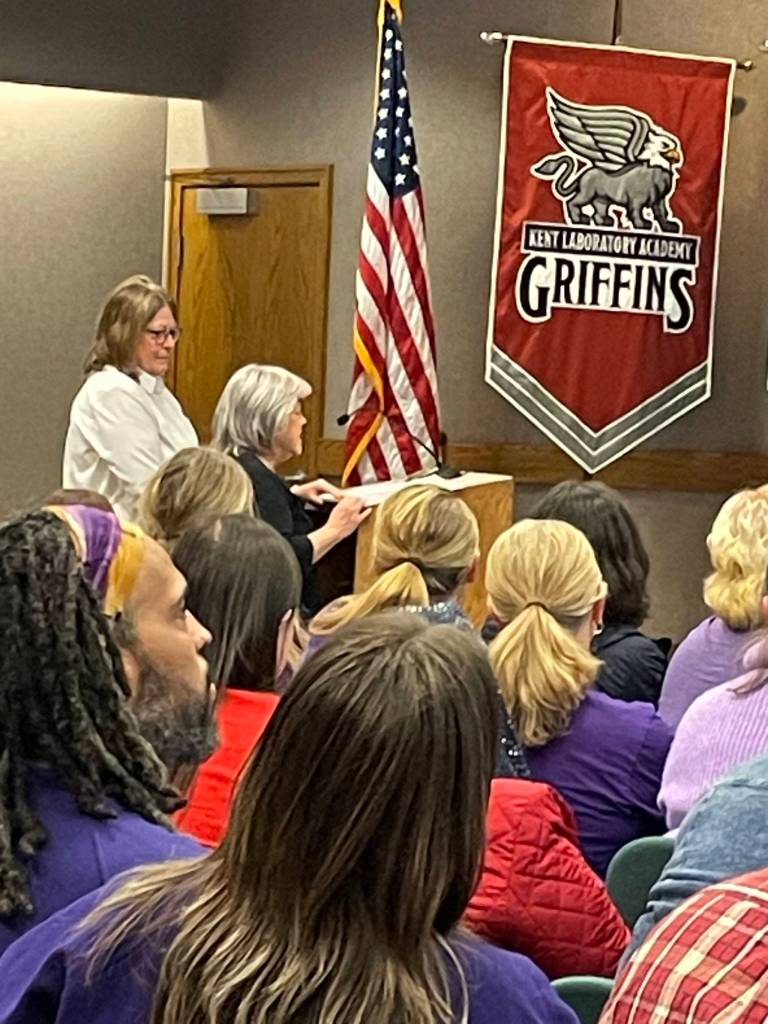
Representatives from a group called Indivisible attend a Kent School Board meeting Feb. 25 to speak to board directors about ways to protect students from ICE. South Sound, Kent, and Covington chapters of Indivisible were in attendance.
According to its website, Indivisible is a nationwide movement organization that is working to stop the rise of authoritarianism in the U.S. As a new chapter, the first official Indivisible Kent meeting was held Feb. 26.
Connie Compton is part of the Covington chapter of Indivisible and represents the KSD Student Advocates Coalition. She said she and other members had a few notes for the current policies the school district has in place if ICE comes to the school.
“We’d like to see things like scripts for staff, what to say to ICE,” said Compton. “It can be kind of a scary moment, and so if you have that right in front of you, you’re much more likely to respond in an effective way.”
Currently, the school district’s plan is for a teacher or staff member to tell an administrator if ICE is seen on campus. Then the administrator will tell ICE they will need to go to the district office and show a judicial warrant, which would be reviewed by the district’s legal counsel.
Compton is also a retired teacher. She had been teaching in the Kent School District for 38 years. She said the issue with this plan is the easy access that ICE can have to students.
“Take Kent-Meridian, for example,” said Compton, referring to one of the district’s high schools. “There are multiple portables in the back of the building, and then there’s a separate building that students also have classes in, and at any given time, there are kids all over the place outside … We know that ICE has targeted teenagers and picked them up in many other places. Drive up, grab, and go. We want the district to implement plans.”
The local representative for the nationwide organization also suggested creating mutual aid plans by having whistleblowers for students and educators in case of an emergency. Compton also said there should be ways to help students and families if their parents are detained.
“We’re not saying the district has to do it all,” said Compton. “We represent several different organizations that would be more than happy to help.”
Since the discussion, the group has scheduled a follow-up meeting with the district on March 11, a week after their meeting with the school board on Feb. 25.
“We hope to sit down and come together and figure out what the district can do, what we can do, how we can do it, and who else we can bring in,” Compton said. “I’ve already been contacted by another group who would like to be part of the plan.”
The group has also been in contact with the Kent School District Deputy Superintendent Wade Barringer as well as the district liaison for Kent School Foundation.
“One of the things I loved about teaching in Kent was the diversity of my students, and the wonderful things that students shared with me that they brought as immigrants to our schools,” Compton said. “Whether bringing me tamales because their grandma made them, or telling me about the zebra that they met in the refugee camp in Kenya … we all can tell you about wonderful things we learned from our students, and once you’re a teacher, you’re always a teacher, and those kids are still important to us.”