
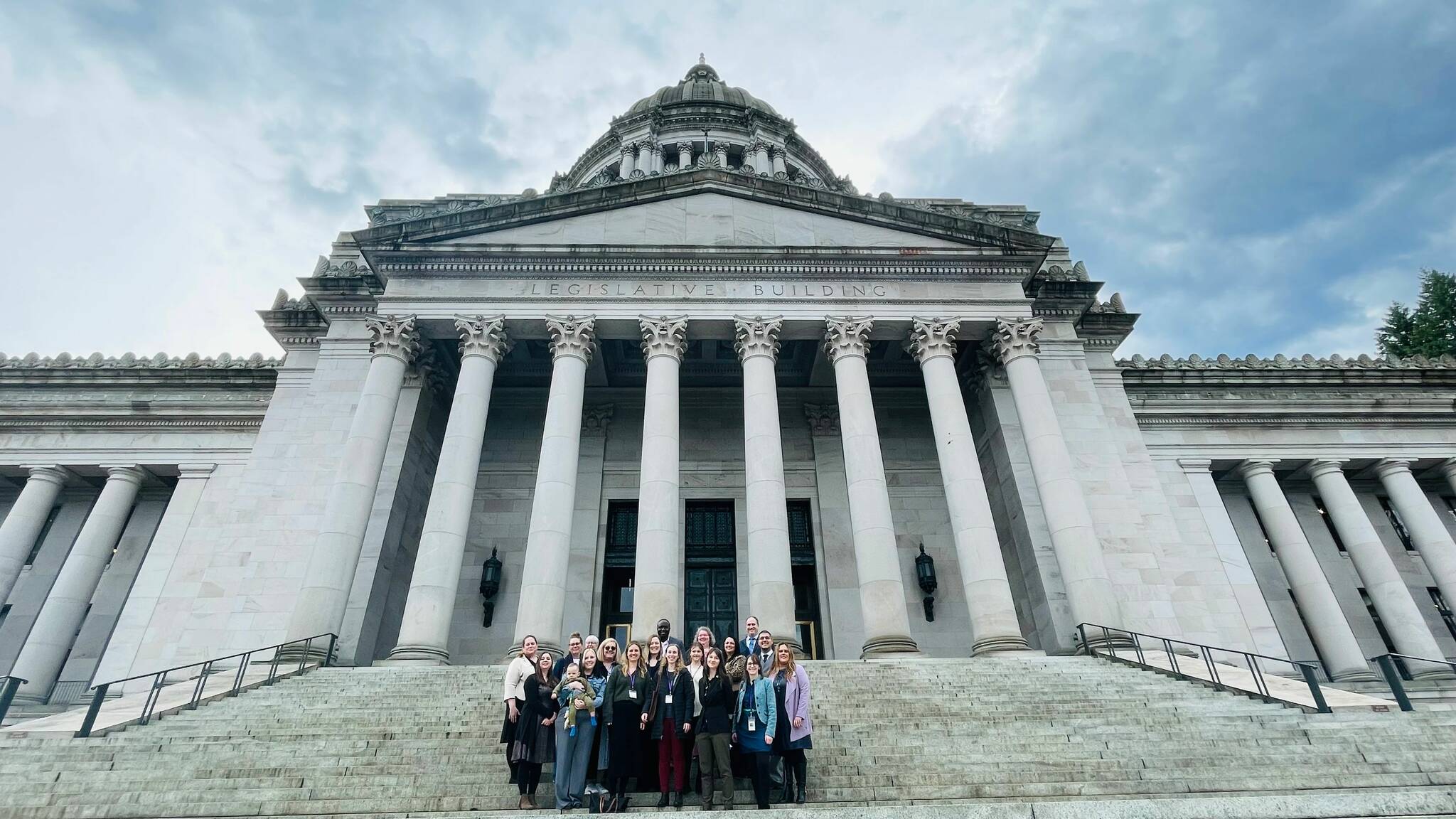
During the short legislative session in Olympia, a bill is aiming to make a technical change in current state law to recover funding for the Washington Early Support for Infants and Toddlers (ESIT) program, which helps children ages 3 and under with disabilities to receive special education services through local providers.
These services include specialized instruction, speech therapy, occupational therapy and physical therapy.
One of House Bill 1916’s primary sponsors is Rep. Tana Senn (D), whose 41st Legislative District includes Mercer Island and parts of Bellevue, Issaquah, Sammamish and Renton.
The Department of Children, Youth and Families, which oversees and manages grant funding to ESIT providers, made a seemingly minute change in 2021. This alteration restricted providers from including eligible children in their counts until they completed their first full month of services. Consequently, ESIT providers were unable to bill for the initial month of services rendered.
Since this technical change, Kindering, the largest ESIT provider in the state, has lost $1.2 million in funding.
“It was, it still is devastating,” Kindering CEO Dr. Lisa Greenwald said. “We’ve been all reeling from that [change] ever since. Honestly, we are at the point where we can’t continue to absorb that cut.”
If the law stays the same, Greenwald said they will start to see impacts on quality and access to services.
“When services decline, it’s the kids who pay the price, and in this case, that is the infants and toddlers with disabilities,” Greenwald said.
By the time children reach 3 years old, 85% of their brain has been developed, Greenwald said, meaning ESIT services can make a lifelong impact and shape the trajectory of a child’s future.
With 40% of children exiting special education at 3 years old, Greenwald said this saves the state and schools millions of dollars.
A study from the RAND Corporation, an independent think tank, showed that for every $1 invested in a well-designed early childhood program, like ESIT, the general public can save up to $17.
The same report found that early childhood programs can reduce the number of students who fail and must repeat a grade in school; increase high school graduation rates; reduce juvenile crime; increase the number of students who go to college; and help adults who used these programs as a child get better jobs, earn higher incomes and reduce the need for welfare.
Senn remarked that upon encountering this bill and visiting Kindering, Child Haven and a center in Tacoma, she witnessed the progress children were making in tandem with support from providers offering families training and tips.
Along with seeing the benefits of ESIT providers, Senn said she was surprised to discover the financial savings these services provided.
“It was like, ‘Oh, my gosh, how are we missing this link?’ And why are we not supporting the very first step in the special education continuum when that’s the most cost-effective and impactful?” Senn said.
Parent and advocate for HB 1916
Rome Johnson, a parent to a child who used Kindering’s ESIT services, vocalized at the Capitol and on social media about the pivotal role these early support services played in helping his daughter thrive.
Johnson speaks out in hopes of reaching the ears of legislators, and as a beacon of support to parents with children who have disabilities.
“This medical parent life is extremely stressful, it’s extremely hard, it’s isolating, and we all have one thing in common … we just want the best for our children,” he said. “So that’s what I want to help deliver, the best for our children.”
Johnson’s daughter, Caliyah Joy, was diagnosed with a rare genetic condition called Pfeiffer syndrome, which fused her skull prematurely and created structural deviations to her face and other body parts.
When Johnson and his wife learned about the condition, he said they struggled to navigate the best path for his daughter.
Johnson explained how the online research he encountered varied, and that individuals with Pfeiffer syndrome did not always follow an identical path.
When Johnson and his wife were introduced to ESIT services within the first few sessions with a provider, the family developed a cohesive plan and specialized strategy for Caliyah Joy.
With guidance from a dedicated provider, strides were made in addressing Caliyah Joy’s communication and mobility.
“They opened our eyes to a lot of different things and different options,” he said.
Johnson said the provider requested exercises to help with Caliyah Joy’s mobility, and suggested braces to help strengthen and stabilize walking and standing.
“You should see her like running up and down the house now. It’s just, it’s amazing,” Johnson smiled as if envisioning the moment unfolding before him.
Johnson said he wants legislators to know when it comes to his child and children like his, help and support can go a long way.
“These kids, they’re so amazing, and they have so many amazing superpowers,” he said. “Just like Superman, you need someone to help you unlock it at times. These services truly gave my daughter the foundation that she needs to continue to propel and unlock her superpower.”
Where HB 1916 stands
So far, the bill has unanimously passed through the Appropriations Committee and the House of Representatives, keeping the bill alive and traveling to the Senate.
The current bill also sits on the governor’s budget — and is Department of Children, Youth and Families’ (DCYF) sole piece of agency request legislation this year, said Kristina Brown, the director of public affairs and communications at Kindering.
“The reason why [the governor’s budget] is important is when we look at our budget, we kind of start with his budget,” Rep. Senn said. “And when something is his priority and our priority, it makes it much more seamless.”
Brown said one reason the bill may be experiencing an easier passage this session is due to the modesty of the proposal compared to the last legislative session.
“This bill doesn’t address everything in the early support system,” she said. “It’s modest in that it’s just allowing ESIT providers to bill ESIT for their first month of services rendered.”
Kindering CEO Greenwald stated that although they feel optimistic about the bill, they will not become complacent.
“We can’t afford to be complacent,” she said.
One aspect the bill is not seeking funding for is a fundamental part of these services: pre-enrollment. Before these services can be provided, providers must conduct pre-enrollment referrals, intake, developmental evaluations and create an Individualized Family Service Plan for the child, which can take over two months and are not part of ESIT funding, according to Kindering.
Greenwald emphasized as needs become greater in Washington, it’s important to ensure the state is investing in the 0- to 3-year-old special education system and remembering how important it is to invest early.
“We don’t want to be left behind in the special education system,” she said.
Talk to us
Please share your story tips by emailing editor@kentreporter.com.
To share your opinion for publication, submit a letter through our website https://www.kentreporter.com/submit-letter/. Include your name, address and daytime phone number. (We’ll only publish your name and hometown.) Please keep letters to 300 words or less.
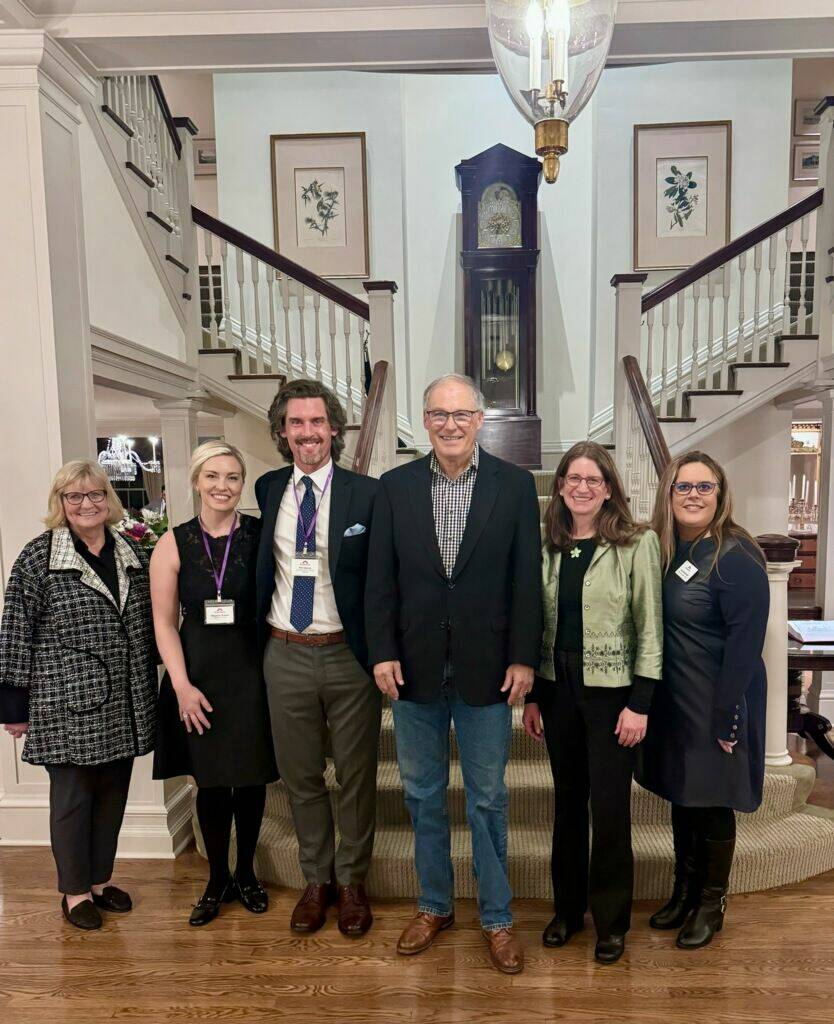
From the right stands First Lady Trudi Inslee, Meghan Banta, Kindering Board President Phil Banta, Gov. Jay Inslee, Rep. Tana Senn and Kindering CEO Dr. Lisa Greenwald. Photo Courtesy of Kindering
