
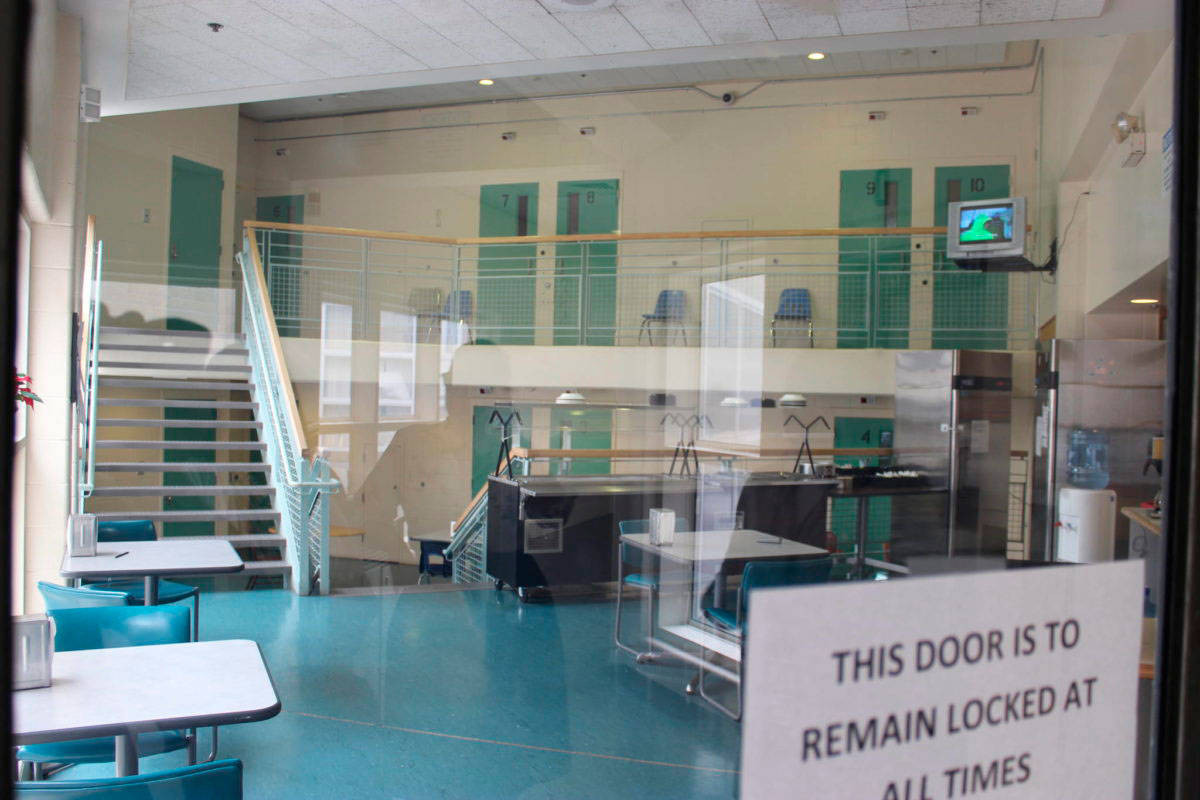
A report from an independent monitor was released earlier this week and showed that King County is still using solitary confinement as a punishment for juveniles despite the King County Council passing a resolution effectively banning it more than a year ago.
The council voted unanimously in December 2017 to ban the use of solitary confinement for juveniles in King County Jail and the Maleng Regional Justice Center. However, a recent report conducted by independent monitor Stephanie Vetter to King County Executive Dow Constantine’s office shows that between July and November 2018, the county illegally used solitary confinement 15 times on eight juvenile inmates.
On top of this, the county’s correction system also used program modification — systems where the juveniles locked up in county correctional facilities are denied free time — nearly 350 times. A public hearing was held March 26 at a packed county Law and Justice Committee meeting where King County Council members had strong words for corrections staff.
“We’ve got to make faster and better progress,” said council member Rod Dembowski. “If you needed more time, you should have come back to this council and said this is harder than we thought.”
Because the county was still using solitary confinement, committee chair Larry Gossett did not release $100,000 in appropriations. Juvenile Division director Pam Jones said they were working toward reform, but it also required retraining staff.
“We considered some things when we talked about solitary confinement. We said we need to be collaborative with the guild, we need to make sure staff were trained,” Jones said.
The independent monitor raised concerns that the average length of stay in juvenile facilities has been increasing from 12 days to more than 300 days, said Clif Curry, the county’s legal analyst. On top of this, youth who turn 18 and are transferred to different prisons do not receive adequate transition services, according to the report.
The county’s agreement to ban solitary confinement for juveniles in county jails stems from a lawsuit filed by four youth alleging they spent days in solitary confinement and were illegally denied educational services. The most recent report was the second of two, with the first being released late last year.
At a Dec. 3 county council meeting, the council approved strict guidelines stating county facilities cannot use solitary confinement unless it is “necessary to prevent significant physical harm to the juvenile detained or to others when less restrictive alternatives would be ineffective.” Juveniles must be given access to lawyers, counselors, educators and social service providers, according to the guidelines.
Vetter’s previous report documented 45 incidents of disciplinary action taken against juveniles during the report’s duration. It also found that youth of color seemed to receive a higher proportion of disciplinary measures. During the previous review period, the report found that African-American youth made up 47 percent of the detention population, but represented 62 percent of those disciplined.
In the most recent report, two African-American juveniles were put in solitary confinement five times; five white juveniles were put in solitary confinement nine times; and one Asian or Pacific Islander was put in solitary once. However, the report noted that Hispanic juveniles may have been counted as white under the county’s reporting mechanism.
For program modifications, the most recent report noted that 58 African-American juveniles were sanctioned 199 times,; 25 Hispanic juveniles were placed under program modification 74 times; and 17 white juveniles were sanctioned 61 times.
Talk to us
Please share your story tips by emailing editor@kentreporter.com.
To share your opinion for publication, submit a letter through our website https://www.kentreporter.com/submit-letter/. Include your name, address and daytime phone number. (We’ll only publish your name and hometown.) Please keep letters to 300 words or less.
