Give parents an Education Savings Account with $10,000 so children can learn phonics
Published 1:30 pm Thursday, September 26, 2019

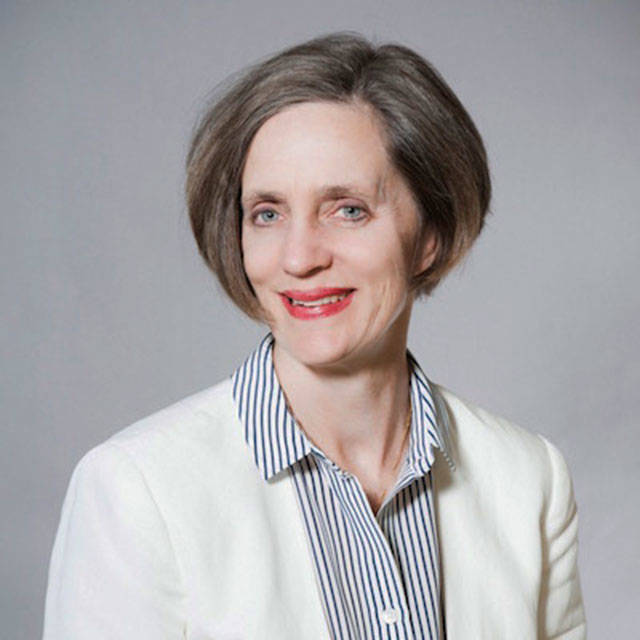


By Liv Finne, Washington Policy Center, for the Auburn Reporter
Teachers are still using the “whole language” method to teach reading, a method rejected two decades ago. It is settled science that deep instruction in phonics, not whole language, is the best way to teach young children to read.
The reading wars of the 1980’s led to this discovery. Back then, the argument got so heated the federal government appointed the National Reading Panel to report on what the science shows. In 2000 they reported that instruction in phonics is the best method.
Phonics instruction teaches children the sounds of letters, and of pairs of letters, to teach children how to decode new words. Whole language instruction teaches children to guess at words, using nearby pictures and context, rather than breaking down words into their parts and sounding them out.
Unfortunately, the Seattle Times reports Washington’s teachers are ignoring the science and using whole language instruction. State officials do not approve of using whole language to teach reading. Aira Jackson at the Office of Superintendent of Public Instruction (OSPI) said:
“We know how to teach children to read,” she said. “There’s really no debate anymore about what skills are necessary to learn how to read.”
But teachers resist teaching phonics because most schools of education do not educate teachers about the settled science. Some say phonics is a boring way to teach and to learn reading. Teachers who do teach phonics are going against the grain.
This has hurt children. Sixty percent of Washington’s fourth-graders score below proficient in reading on the nation’s report card, the National Assessment of Educational Progress, a number that has hardly budged for 25 years.
Children need deep instruction in phonics to learn how to read confidently. Children with dyslexia, a common learning disability, especially benefit from phonics instruction.
Parents are turning to private schools to help.
For example, Our Lady of the Lake, a Catholic school in the middle-class Seattle Wedgewood neighborhood where tuition is $8,000 a year, knows how to teach kids who struggle to read and write. Vice Principal Bonnie Meyer says:
“If all teachers would use a structured literacy approach, and we did it in elementary schools, we’d see far fewer kids struggling.”
Last year the Legislature created the Dyslexia Council to make recommendations about phonics instruction. Aira Jackson of OSPI promises the Dyslexia Council will change the way reading is taught in Washington’s schools.
This promise of hope and change asks the public to engage in a kind of magical thinking, like the belief in fairies and pixie dust. It’s been 20 years since the National Panel Report, and 40 years since the reading wars. Hard experience shows the traditional public schools in our state will stick with whole language, and are likely to ignore the Dyslexia Council, just like they ignored the National Reading Panel.
Parents can’t engage in magical thinking. Their children need to learn how to read.
The solution is to give parents direct aid to help their children. That’s what real caring about the education of children would look like.
Lawmakers should give families with dyslexic students (and other students having trouble learning to read) the sum of $10,000 a year in an Education Savings Account to pay tuition at a private school that provides instruction in phonics. States like Florida, North Carolina, and Tennessee give parents Education Savings Accounts so they can help their children learn how to read. It’s time Washington did too.
Liv Finne is director of the Center for Education at the Washington Policy Center (WPC), an independent, nonprofit think tank that promotes sound public policy based on free-market solutions. Through its research centers, WPC focuses on core areas of public policy, including education.