
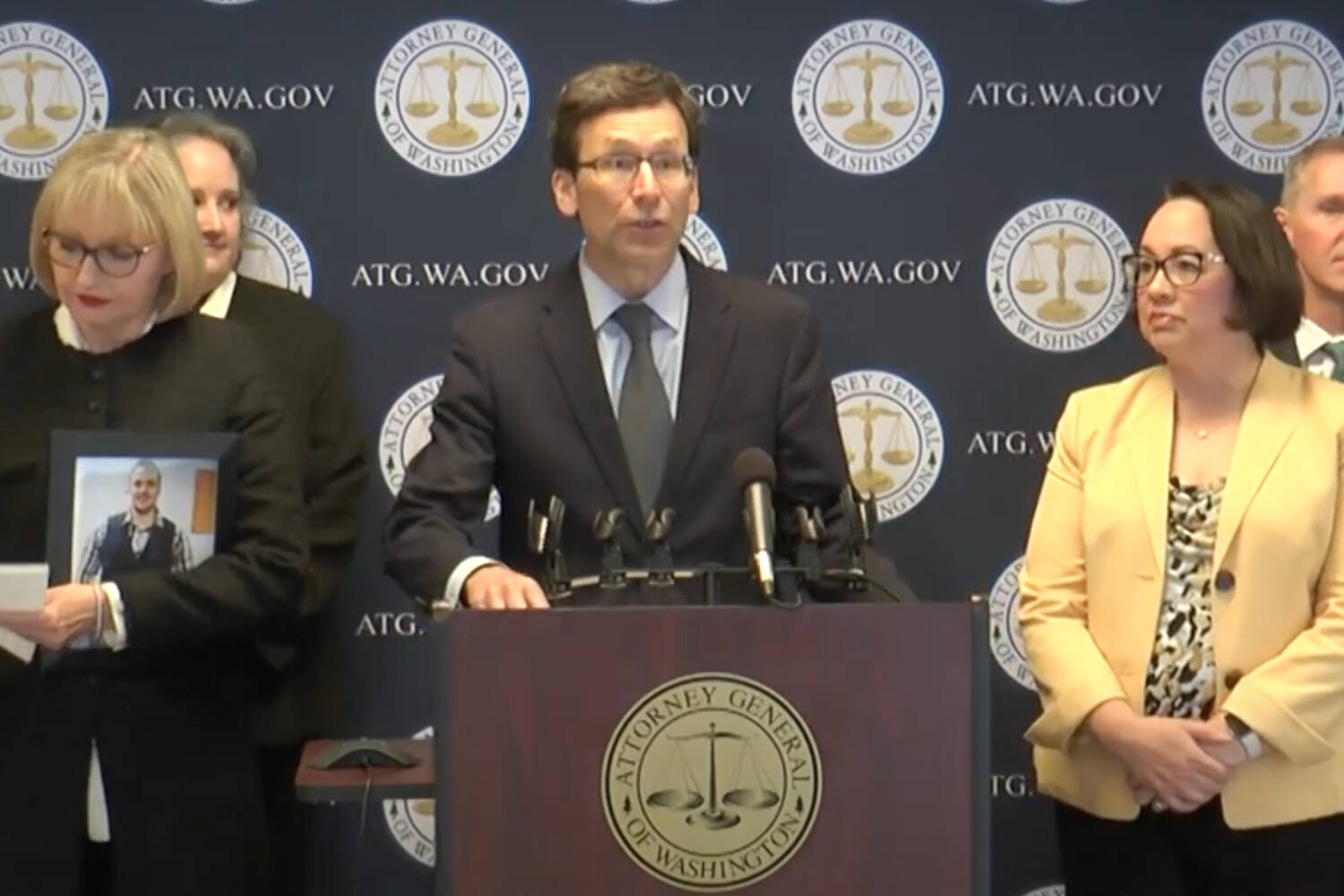
Six months after taking the three largest distributors of prescription opioids to trial, Attorney General Bob Ferguson announced a legal resolution that will deliver approximately a half-billion dollars to Washington to combat the opioid epidemic in the state.
The Washington Attorney General’s trial against McKesson Corp., Cardinal Health Inc. and AmerisourceBergen Drug Corp. began in King County Superior Court on Nov. 15, 2021 — more than two years after Ferguson filed a lawsuit against the three large corporations for helping to fuel the opioid epidemic.
As a result of the resolution announced on May 3, these three opioid distributors will pay a total of $518 million. More than $476 million will be directed toward addressing the opioid epidemic here in Washington.
Ferguson rejected a national settlement between the three opioid distributors in order to take these entities to trial. Ferguson’s office is credited the decision as the reason Washington received $46 million in additional resources from the distributors to provide substance abuse treatment and support other strategies to address the opioid crisis, including housing and other wrap-around services.
“We could have joined the overwhelming majority of states and settled with the largest opioid distributors, but we chose to fight them in court instead,” Ferguson said. “That decision to take them to court will result in significant additional resources for Washington to combat the opioid epidemic. This is a historic resolution — one of the largest in state history. We forced these companies to stand trial for their conduct.”
Ferguson’s lawsuit against McKesson, Cardinal Health and AmerisourceBergen asserted that the three Fortune 15 companies made billions of dollars feeding the opioid epidemic, shipping huge amounts of oxycodone, fentanyl, hydrocodone and other prescription opioids into the state even when they knew or should have known those drugs were likely to end up in the hands of drug dealers and those suffering from substance use disorder.
Opioid distributors are legally required to monitor the size and frequency of prescription opioid orders to identify suspicious orders that could be diverted into the illegal drug market. Distributors are required to stop these suspicious shipments and report them to the federal Drug Enforcement Agency.
Instead, McKesson, Cardinal Health and AmerisourceBergen faced repeated actions from the DEA for continuously failing to stop and report suspicious opioid shipments, paying hundreds of millions in fines for their failure to follow the rules.
Prescriptions and sales of opioids in Washington skyrocketed more than 500 percent between 1997 and 2011. In 2011, at the peak of overall sales in Washington, more than 112 million daily doses of all prescription opioids were dispensed in the state — enough for a 16-day supply for every woman, man and child in Washington.
In 2015, there were eight counties with more prescriptions than population, led by Asotin, with nearly one-and-a-half prescriptions per person. The other counties were Clallam, Grays Harbor, Columbia, Garfield, Pend Oreille, Lewis and Benton.
In 2008, there were 16 counties with more prescriptions than people.
Ferguson asserted that McKesson, Cardinal Health and AmerisourceBergen violated the law by filling thousands of suspicious orders in Washington state without adequately identifying them or reporting them.
The Attorney General’s office says It is the second time Ferguson’s rejection of a national settlement led to a better deal for Washingtonians. In March, Ferguson announced that Washington will receive $183 million to address the opioid crisis as a result of his office successfully leading the challenge to the Purdue bankruptcy plan — $113 million more than Washington would have received under the original deal.
As part of his strategy of rejecting national settlements and choosing to litigate, Ferguson also declined to settle with Johnson & Johnson last year. The Washington Attorney General’s Office has a trial scheduled against opioid manufacturer Johnson & Johnson in September. Ferguson’s legal team is conducting multiple ongoing investigations into conduct by other entities that helped fuel the epidemic.
In recent years, the Washington Attorney General’s Office has recovered a total of $714.5 million from opioid litigation. This total includes $183 million in recoveries from Purdue Pharma and $13.5 million from McKinsey to address harms from the opioid crisis.
The resolution announced on May 3, is not final until all litigating Washington jurisdictions and at least 90 percent of non-litigating jurisdictions with populations over 10,000 agree to its terms, and the King County Superior Court judge approves. This is similar to the structure of the national resolution.
If approved, Washington state will receive $518 million. These resources will be paid out over a period of 17 years. This is the same time period for payment as the national settlement that virtually every attorney general agreed to earlier this year.
More than $476 million must be used to combat the opioid epidemic through a range of approved strategies. These strategies are consistent with the state’s Opioid Response Plan.
Approved strategies for addressing the opioid epidemic include: Improving and expanding treatment for opioid use disorder; supporting individuals in treatment and recovery, including providing comprehensive wrap-around services to individuals with opioid use disorder, including housing, transportation, education, job placement, job training or childcare; addressing the needs of pregnant women and their families, including those with babies with neonatal disorder; preventing opioid misuse, overprescribing and overdoses through, among other strategies, school-based and youth-focused programs, public education campaigns, increased availability and distribution of naloxone and other drugs that treat overdoses, additional training and enhancements to the prescription drug monitoring program; and supporting first responders.
The remainder will cover the costs of litigation, including direct trial expenses of more than $10 million, and approximately $11 million for legal expenses of all litigating local governments. Local governments can allocate additional resources for legal expenses if they choose.
Talk to us
Please share your story tips by emailing editor@kentreporter.com.
To share your opinion for publication, submit a letter through our website https://www.kentreporter.com/submit-letter/. Include your name, address and daytime phone number. (We’ll only publish your name and hometown.) Please keep letters to 300 words or less.
