Kent City Council approves higher sales tax to hire more police
Published 2:45 pm Friday, September 19, 2025

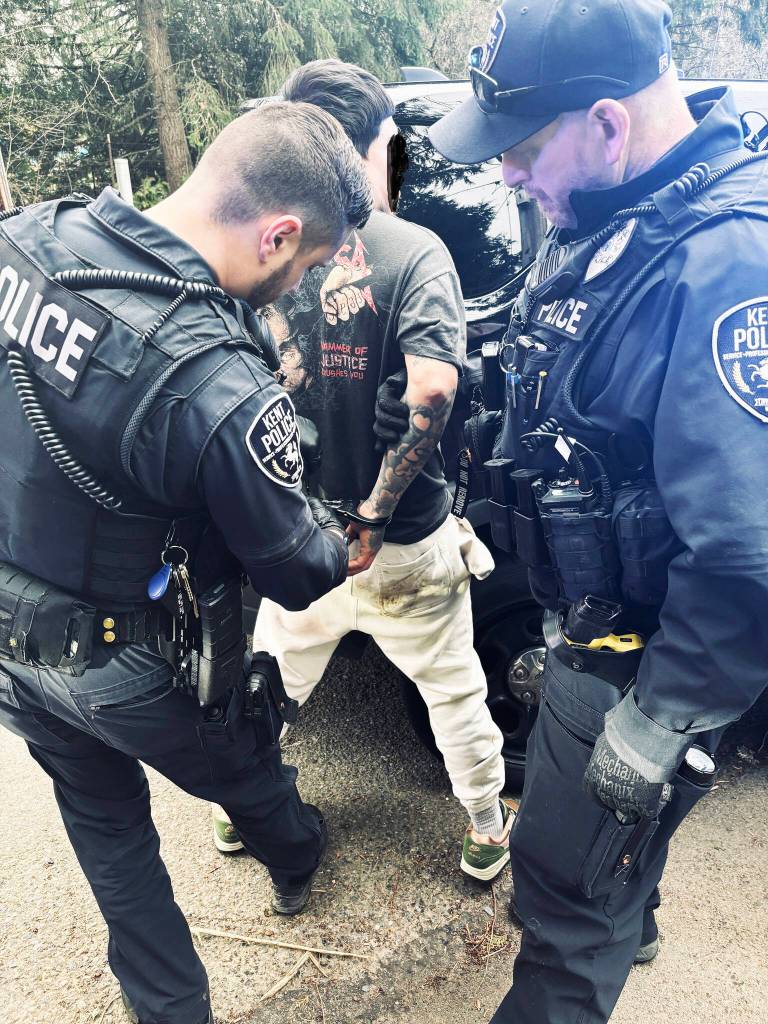


The sales tax in Kent will go up a bit in 2026 to pay for 10 new police officers.
The Kent City Council voted 7-0 on Sept. 16 to raise the sales tax 0.1% (1 cent on $10 purchase, 10 cents on $100 purchase) to pay for more police officers and four support positions. The annual revenue from the increase is an estimated $3.65 million, according to a presentation by City Finance Director Paula Painter to the council.
“It doesn’t fix our problem but it definitely helps,” Councilmember Bill Boyce said. “We want our citizens to be safe. I understand every dollar impacts a household, but it’s critical for public safety if people call (911) they get a response.”
Mayor Dana Ralph, who has heavily lobbied the state Legislature in Olympia the past two years to allow the city to raise the sales tax as high as 0.3% to bring in an estimated $12 million annually to pay for 30 more officers, appreciated the council’s vote.
“I talk to residents every single day and public safety is the number one thing that comes up in conversations,” Ralph said after the vote. “The action you took to put additional officers on the street, I want to say thank you very much.”
The 2025 Legislature approved House Bill 2015, which allows cities and counties to enact an 0.1% sales tax for criminal justice without going to voters.
“If we don’t take action on this we would have a hard time to ask the Legislature for additional funding,” Councilmember Toni Troutner said.
The higher sales tax in Kent will start on Jan. 1, 2026. The revenue will allow the city to hire more officers starting in January, although additional hires will need to be approved by the council, Painter said. The money will go into a dedicated fund for the new hires.
In addition to 10 officers, the city plans to hire four other positions to support the work created by more officers. Those positions are a corrections officer, an evidence custodian, a prosecutor and a defense attorney, according to city documents.
The current sales tax in Kent is 10.2%, according to city documents. A total of 6.5% goes to the state and 3.7% to local government, which breaks down to 1.40% to Sound Transit, 1.35% to King County and 0.95% to the city.
With the higher sales tax of 10.3%, the median household income of $90,420 in Kent will pay about $36 more per year ($3,725 compared to $3,689), according to city documents presented to the council by Painter. That’s based on a household spending about 40% of its income on items subject to sales tax.
A household income in Kent of $58,740 would pay about $23 more per year ($2,420 compared to $2,397).
Force to increase to 180
Police Chief Rafael Padilla has talked for years about the need for more officers in Kent based on its population. The city has a population of 136,588, according to the U.S. Census Bureau’s 2024 statistics.
The new hires will increase the force to 180 officers from 170. Padilla has said the city needs as many as 200 officers.
“This does not fix our staffing,” Padilla said to the council. “It still falls short about 20 to 25 officers, but it is a significant step and necessary step. We will be able to deliver for our community and they will see a difference by adding these officers.”
Padilla said the larger force allows the agency to be more proactive rather than reactive.
“Preventative measures you can only do with increased numbers,” he said. “When we stabilized staffing we saw our most dramatic drop in crime rates.”
In May 2022, Kent Police were down 18 officers due to more than two dozen officers who retired or left for other jobs. By the end of 2022, pay increases, hiring bonuses and a heavy recruiting effort, the department was back to the 166 officers then allowed under the city budget.
The council in November 2024 approved a proposal by Ralph to increases the city’s business and occupation (B&O) tax to help pay for four new police department positions in 2025, which brought the force up to its current budget of 170 officers.
With an increase to 180 officers, Padilla told the council in a June report that he plans to increase bicycle patrols by two officers and a sergeant; add three detectives and a sergeant for a street narcotics team and human trafficking intervention; and form a new two-officer unit to focus on community-based patrols as people tell him they want to see officers in their neighborhoods or near their businesses.
Sales tax revenue lost
City leaders have argued for years that the Legislature needs to help Kent make up for revenue lost because of the streamlined sales tax. The Legislature voted in 2007 (effective in 2008) to change the state to a destination-based sales tax, taking away millions of dollars of tax revenue Kent had received from the many distribution and wholesale warehouses in the city. The state paid sales tax mitigation funds to Kent for many years, but the last payment of $2 million is scheduled to end in 2026.
“The amount of revenue lost by the city now amounts to more than $18 million annually,” City Chief Administrative Officer Pat Fitzpatrick said in a Sept. 18 email to the Kent Reporter. “And, in an industrial and warehousing heavy city like Kent, the challenge is compounded by the detrimental impacts the industry has on our roads. Road maintenance is costly. Kent has taken measures to change the land uses in the industrial core with its ‘Rally the Valley’ planning efforts, but those changes will not have an impact for generations.”
Fitzpatrick said with all of its warehouses, Kent differs from cities such as Tukwila and Auburn.
“If you look at an aerial map of Kent, you will see the Kent Valley with its many square miles of warehousing,” he said. “What you won’t see in that aerial photo is a large retail presence like an auto row or a large shopping mall. The backbone of Kent’s economy is warehousing and industrial businesses.”
To combat the loss of sales tax revenue, the council in 2013 adopted a new B&O tax with built-increases in future years. That tax now brings in about $24 million per year, according to city budget documents. That decision gave the city a third major tax revenue source to go with property and sales taxes.
The B&O tax also is how the city funded the four additional officers, two sergeants and one officer for patrol and one corrections sergeant for the city jail, in the 2025-2026 biennium budget.
Now Kent will get more officers with the higher sales tax.
“Our community deserves better,” Council President Satwinder Kaur said about the challenges for tax revenue to hire more police. “We’ve been to Olympia trying everything to increase officers. This is the next step to take to add additional positions so families and community feel safe.”