‘Lights Out’ from 11 p.m. to 6 a.m. as millions of birds return home
Published 10:27 am Wednesday, April 29, 2026

Think of the birds, dim your lights.
The Olympic Peninsula Audubon Society calls on everyone throughout Washington state — especially the Puget Sound area — to dim or turn off non-essential outdoor lighting from 11 p.m. to 6 a.m. from Wednesday, April 29 to Friday May 1, along with closing shades to reduce skyglow.
Why? To help migrating birds safely make their way home for the summer, of course.
According to the Purdue AeroEco Lab, peak spring migration for birds happens in early to late May and this year, the birds are coming home to roost, with the 90th percentile of predicted stopover density happening over these three nights.
“Lights Out” helps these migrating bird by reducing collision risk by lowering skyglow and attracting fewer birds into illuminated urban coves, conserves energy, saves money and improves habitat quality by keeping nocturnal habitat quality by keeping nocturnal environments darker for resting birds near stopover hotspots.
The majority of birds fly at night, navigating with the night sky, says Audubon.org. As these birds pass over big cities, they can become disoriented by bright artificial lights and skyglow, which often causes the migrating birds to collide with buildings or windows.
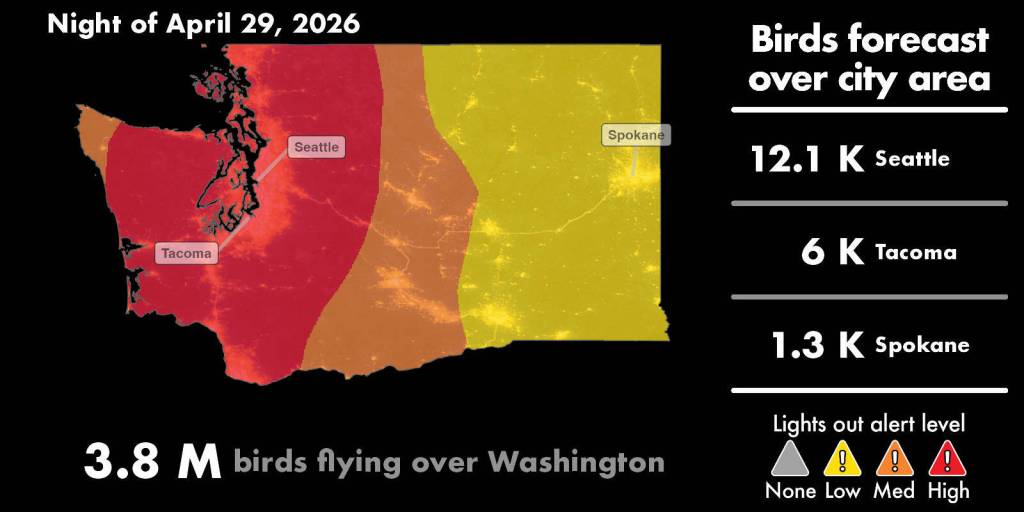
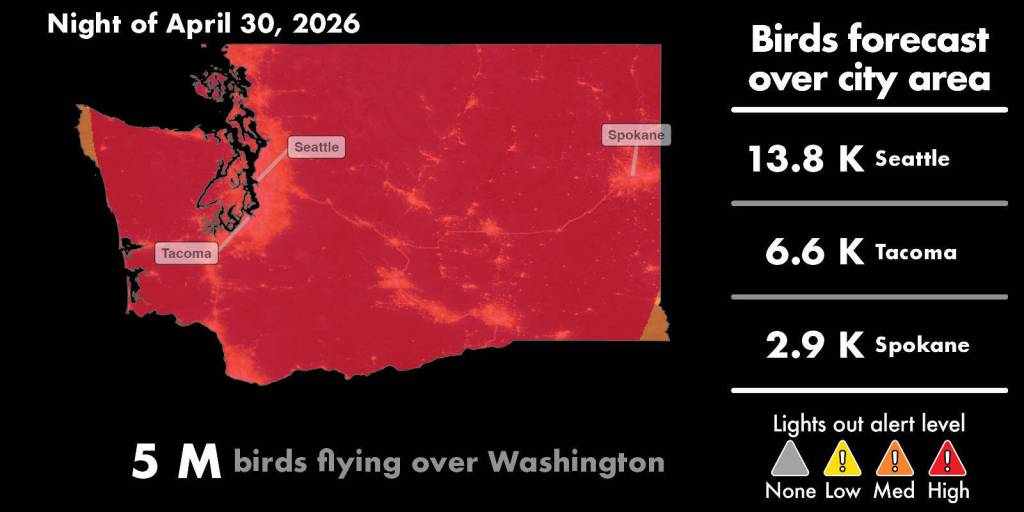
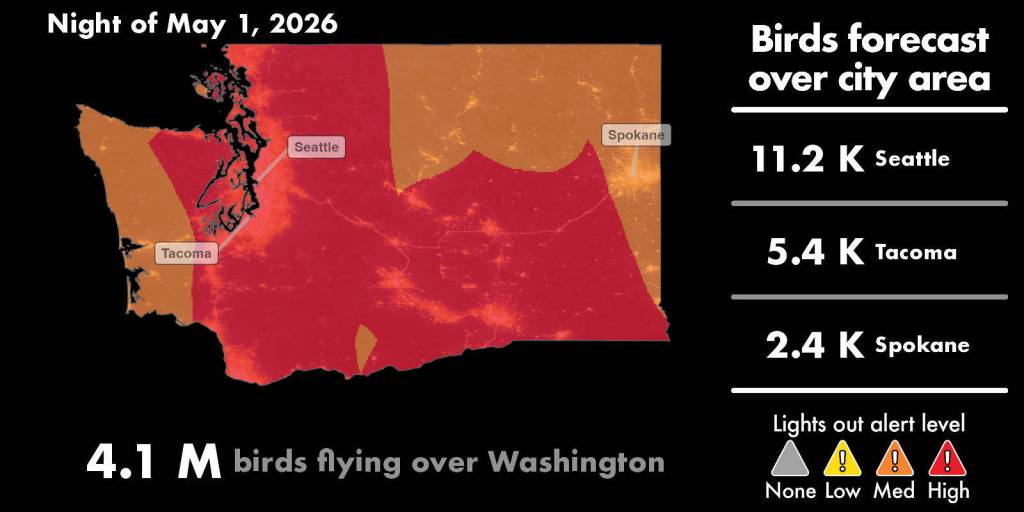
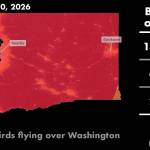
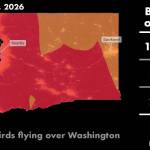
On the night of April 29, 3.8 million birds are predicted to fly over Washington state, focusing on the western part of the state and the Puget Sound area. On April 30, 5 million birds are predicted to fly, covering the vast majority of the state. On May 1, 4.1 million birds are expected to fly, with the Puget Sound and southern Washington expected to have the highest level of migration.
Purdue AeroEco Lab uses a color-graded map to show historical concentrations of migration. Red areas mean that the predicted stopover density is above the 90th percentile. Peak fall migration happens in late September and early October, which Purdue also monitors.
To learn more about the migration forecast and seasonal timing, visit aeroecolab.com/washington.