Report: Washington salmon are in hot water
Published 1:30 am Friday, January 29, 2021
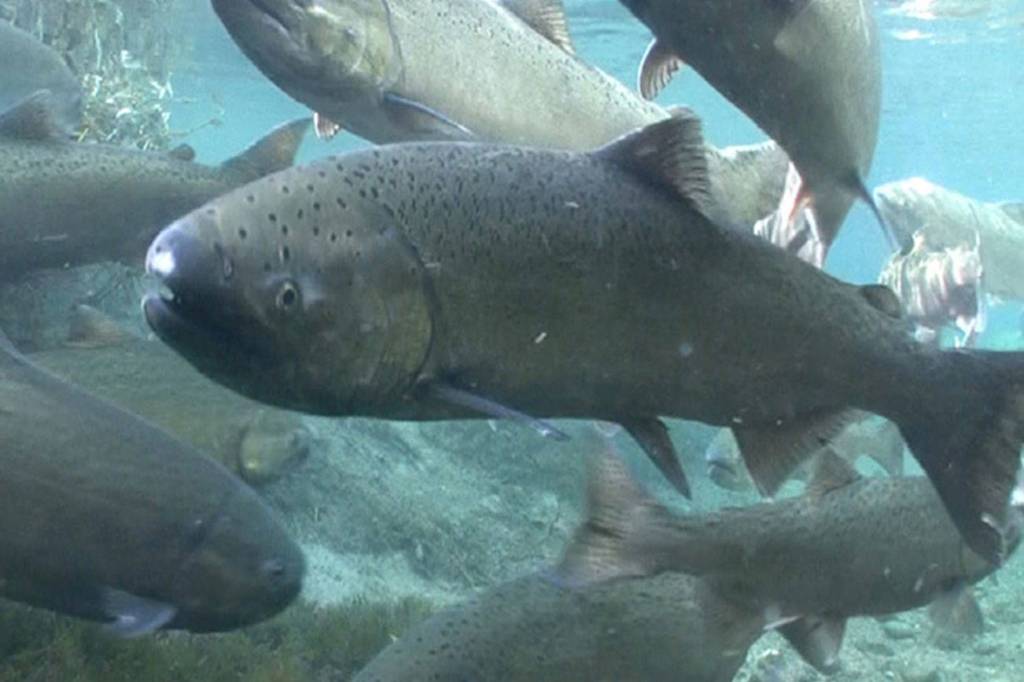
Puget Sound salmon are in dire straits, with at least 10 federally endangered species in danger of going extinct.
An update to the State of Salmon report, produced every two years by Washington state’s Recreation and Conservation Office, was released this month. It outlines threats that local salmon populations face from increased development to habitat degradation.
Puget Sound is home to 69 populations of chinook salmon, steelhead and bull trout. All are listed under the Endangered Species Act, and none are close to recovery.
In 1991, the federal government listed Snake River sockeye as endangered. It was the first salmon in the Pacific Northwest to be listed as endangered. Now there are 14 species listed in Washington state alone. And while there has been some progress in conservation, especially with the Snake River steelhead and fall chinook, the Lower Columbia steelhead and the Hood Canal summer chum, the remaining 10 species are in crisis, according to the report.
One of the driving factors behind this is a lack of funding, the report states. A 2011 study found the statewide cost of implementing habitat-related elements during that decade would require $4.7 billion in capital costs. But as of today, only $1 billion has been invested — less than a quarter of what is needed.
What this level of funding has led to is many of the smaller and easier projects being completed. But larger and more complex projects that require changing land use and people’s behavior need additional money. These projects will become harder to complete as the state’s population grows to a projected nine million people by 2040.
Major factors that are hurting salmon include the effects of climate change, pollution, development near streams and waterways and fish passage barriers, which block salmon from reaching spawning habitat in Puget Sound streams.
There have been some accomplishments too, the report states. Since 2005, there’s been more than 3,000 fish passage barriers corrected, 20,000 acres of riparian areas treated and more than 3,400 miles of stream made accessible to salmon.
River systems in the Snoqualmie Valley face similar problems. The 2020 State of our Watersheds report by the Treaty Tribes of Western Washington outlines these challenges for the Snohomish River watershed, which includes the Snoqualmie River. The watershed is shaped roughly like a wedge with the Cascades to the east, the Snoqualmie River to the south and the Skykomish River to the north. It tapers to a point where it reaches Puget Sound.
The river systems support coho, chinook, chum and pink salmon along with steelhead, cutthroat and bull trout.
Since 1990, the human population in the watershed is estimated to have grown from 230,000 to more than 390,000. And this is expected to grow at a rate of 59% over the next 30 years.
“The last 150 years of human expansion has left the natural ecology of the Snohomish watershed in a stressed and depleted state,” the report states.
It identified the amount and quality of habitat in the watershed as the main factor in limiting salmon habitat. Practices like building walls on the banks of streams and lakes to prevent erosion, but which makes juvenile fish easy prey for predators, is a major factor contributing to low salmon numbers.
Riparian forest cover, along the banks of water, is another factor. These plants provide shade and keep water cool. Salmon are temperature sensitive, and need cool water to survive. Between 2005 an 2017, there has been a net loss of 25 acres of riparian forest cover. Culvert barriers to fish passage remain a problem too.
On top of this, new groundwater wells continue to be built in a closed tributary watershed. Since 2015, nearly 30% of all wells in the watershed have occurred in these closed basins.
And while forest loss in the basin has drastically decreased since 2009, the remaining forest in the lowlands is in poor condition. The percentage of impervious surfaces, like blacktop or concrete, which water can’t penetrate, has also increased in the Snoqualmie Valley.
In the Snohomish watershed, there are more than 1,221 known barriers blocking or impeding fish from an estimated 400 miles of upstream habitat. There are also 129 dams and two pump stations.
“Despite the degradations it has suffered, the Snohomish watershed retains the potential to once again be a strong salmon producer that will provide the Tulalip people with the benefits they retained when they gave up so much else in the Treaty of Point Elliott,” the report states.
There are 20 treaty tribes in Puget Sound that have rights to fish in their usual and accustomed places — rights that are enshrined through treaties with the federal government.
Other challenges facing fish in the area include low oxygen levels in parts of Puget Sound. The state Department of Ecology is developing a permit that will regulate the amount of nitrogen that wastewater treatment plants are allowed to send into the Sound.
In King County, the Lake Sammamish kokanee are another fish population facing an uncertain future. A massive effort to ensure their survival has been mounted, which includes raising young fish on Orcas Island in a hatchery to later release them in the Lake Sammamish water system.