
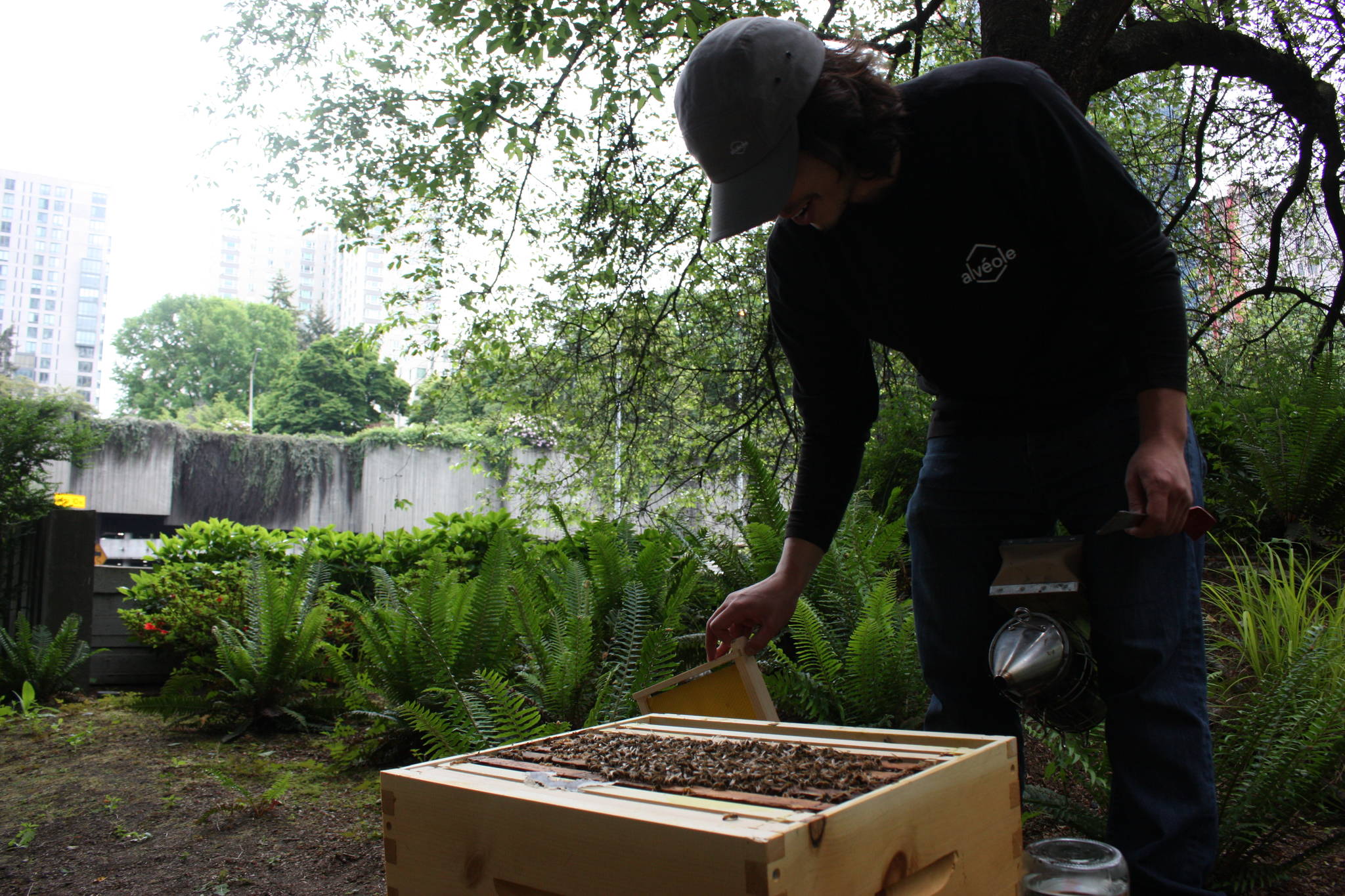
In the heart of downtown Seattle in Union Square, Pedro Miola walks through a maze of a construction site. He walks up steps that are closed to the public and paces through an unpaved plaza.
He squeezes in between the barriers of a plastic orange fence, temporarily erected to keep pedestrians out of the busy construction site. He enters a courtyard garden. The indigenous sword ferns and shading rhododendrons provide a hidden gem of natural flora nestled in the concrete jungle.
Just past the borders of the courtyard is Interstate 5, just out of view, but still made notably present by the sound and wind of cars passing by. On the other side of the garden stands the glass panel windows of a Seattle skyscraper, stretching into the sky and nestling the grove into obscurity.
In the middle of the garden sits a quiet and unassuming wooden box. A bee box, full of a living, breathing, working and breeding colony of honey bees.
It was early in the morning, the air still crisp and cool. Miola said the bees become more active as the temperature increases, both with the time of the day and the season.
He takes what looks like a piece of burlap and uses a lighter to ignite it. It burns for a second before he blows out the flame and places the smoldering smoking cloth into a metal billow. He pumps the specifically designed contraption as billows of soft smoke roll out around the wooden box.
He explains that the smoke covers the smell of the bees’ aggression pheromone, which they use to communicate danger and coordinate a defense of their hive.
Miola is not wearing any of the beekeeper’s protective gear that many have come to associate with the profession. No white padded suit, no net to keep the stinging insects away from his head and neck.
As he opens the box to reveal the mass of bees within, a bee lands on his neck. Without panic or worry, he gently brushes the bee away from his exposed skin. The bee makes its way to the collar of his shirt, where it goes unnoticed by Miola.
The bees he takes care of are an Italian species, specifically selected because of their docile nature. He tends to about 45 different bee colonies between Seattle and Portland for a company called Alvéole, many of them in urban areas and neighborhoods.
Inside the box are a series of parallel panels. Bees fill the crevices, depositing pollen, building wax combs onto the panels, tending to their young and of course, slowly making honey within the combs.
He pulls out a bee-covered panel to show how the honey is kept within the constructed wax combs. He presses his finder into the comb and honey oozes out. He tastes the golden honey on his finger, noting its natural sweetness.
He then pulls out a different panel in which the combs were being used by the bees to store pollen. Miola said the combs of pollen often paint a mosaic with the different kinds of pollen. He said the colors change depending on which hive he is visiting, as it is wholly dependent on the flora within a few miles of the hive.
Miola said there are hives he takes care of in North Bend that are filled with bright yellow pollen from the abundance of Scotch Broom. Bees in these colonies look comical, he said, as they arrive at the hive covered in the pollen, looking yellow and bulbous.
Miola said his main responsibilities when tending to these hives are to make sure there are no pests or parasites infiltrating the hive, and to make sure that the hive does not outgrow its space inside the box.
As the hive grows, additional boxes and panels are stacked on top, giving the colony room to grow and adopt their new space.
Miola said “swarming” results when the colony does not have enough space. It’s a collective behavior in which the hive splits in half, and one half leaves the box to look for a new place to build a home.
The problem with this result in urban beekeeping is that the swarm will likely end up somewhere in the city where bee-weary city folks live, work or do business. When this problem occurs, Miola said he is often notified by a panicked phone call.
Miola said responding to a swarm can be a great teaching opportunity for those unfamiliar with bees. To take care of the issue he uses a “ghostbusters-like” vacuum backpack to safely capture the bees without damaging them.
Beekeeping was not a career that Miola planned on. He was studying to go to medical school and even got accepted into medical school before he decided to “bookmark” that path in what he called his “first retirement.”
He followed advice he got from many healthcare experts he met while studying, telling him to explore some passions and hobbies before committing himself to the medical profession.
He did some traveling and visited friends and family before he met up with a friend in Chicago. She was an urban beekeeper there for Alvéole where he was able to see what an urban beekeeper did.
He was immediately impacted by the trade, the process and the opportunity to educate people about this age-old craft.
At a time that Miola was “disheartened” by what was to gain from his education and undecided about what he really wanted to do, beekeeping put itself in his lap.
A career and a passion that allows him to be present in the environment and the moment, and one that allows him to both learn and teach.
Talk to us
Please share your story tips by emailing editor@kentreporter.com.
To share your opinion for publication, submit a letter through our website https://www.kentreporter.com/submit-letter/. Include your name, address and daytime phone number. (We’ll only publish your name and hometown.) Please keep letters to 300 words or less.
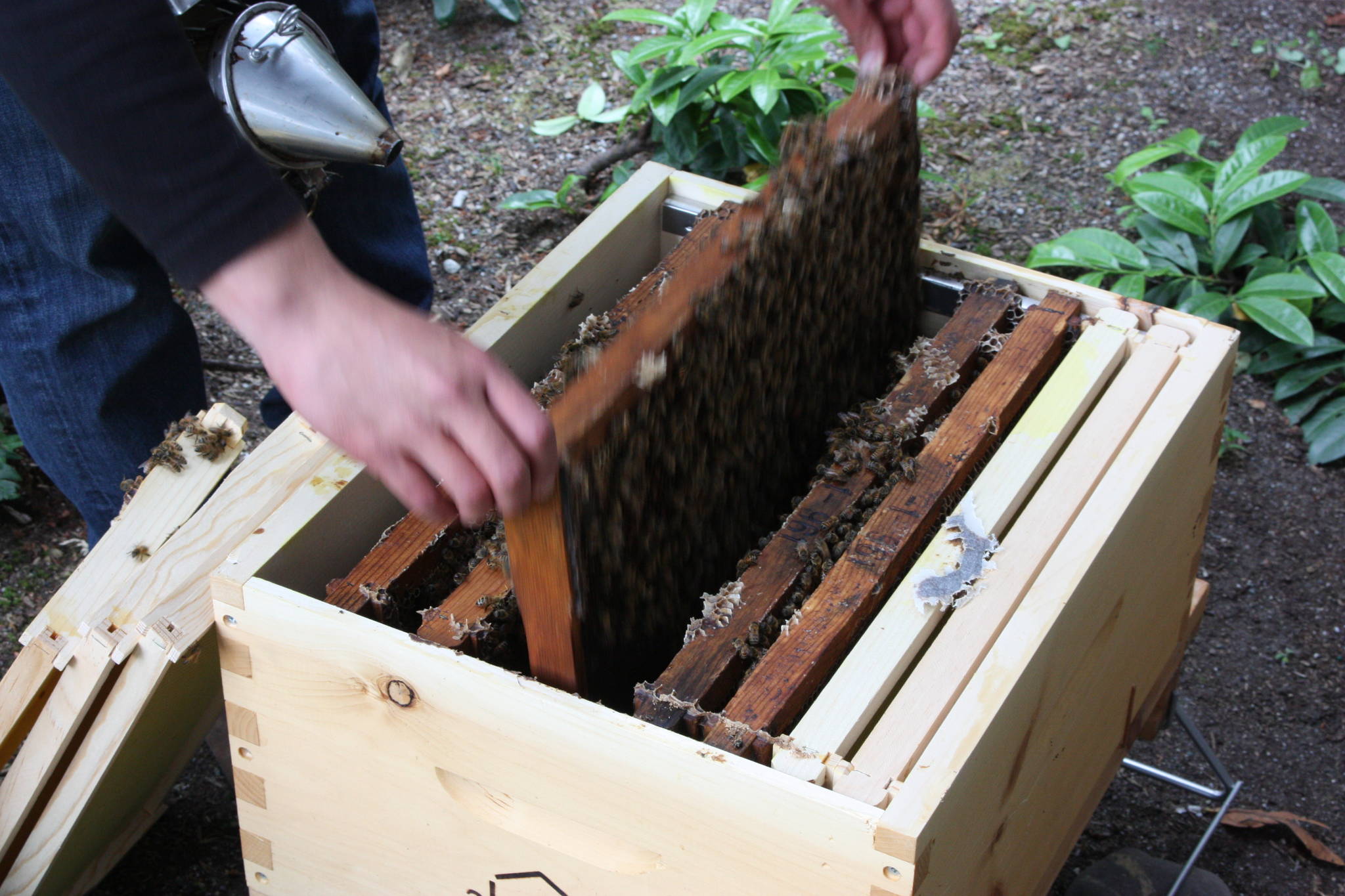
Pedro Miola removes a panel out of the hive box. (Photo by Cameron Sheppard)
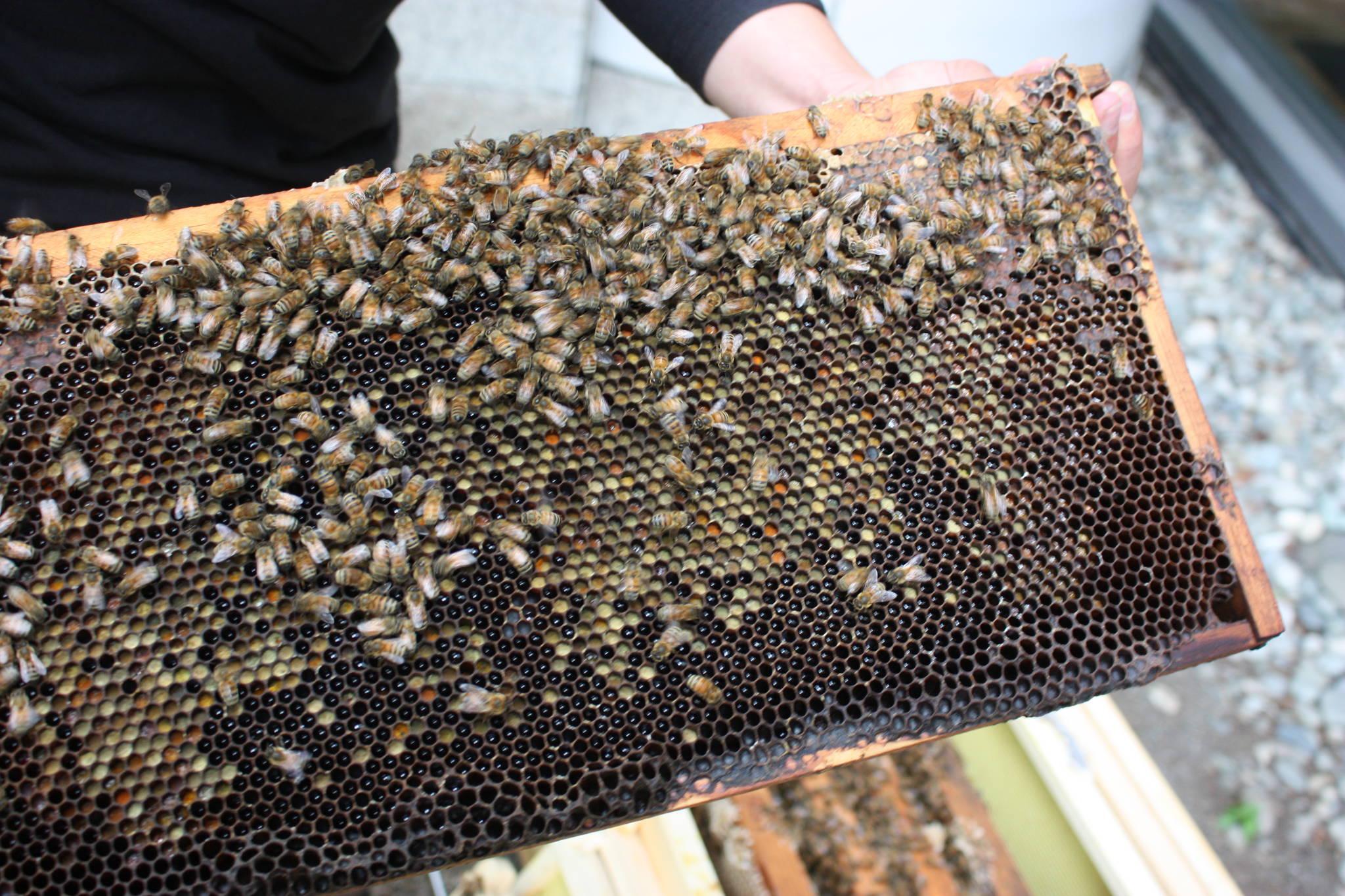
Pedro Miola displays the mosaic of different kinds and colors of pollen the bees collected. (Photo by Cameron Sheppard)
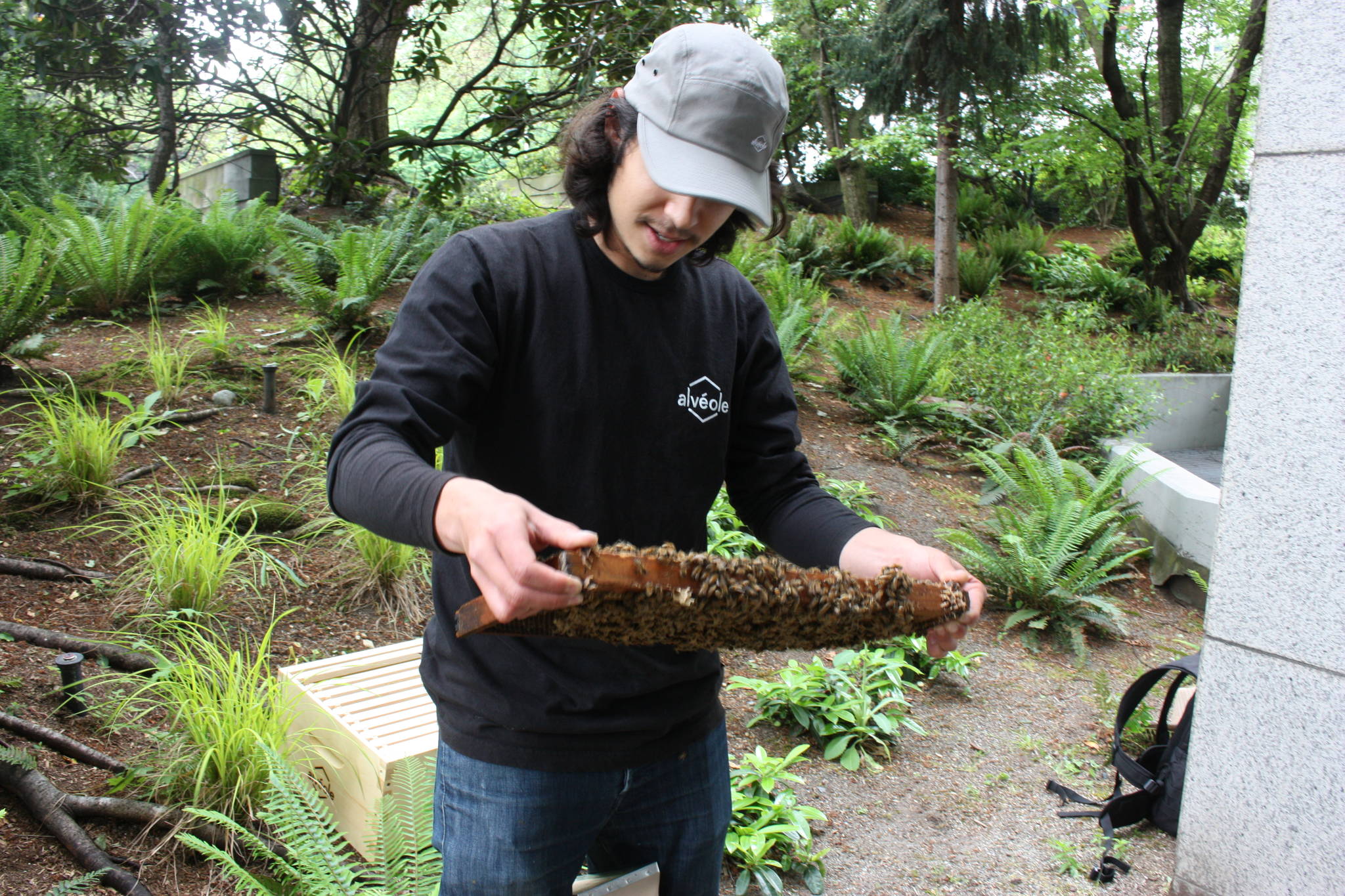
Pedro Miola inspects the panel to ensure the bees are healthy. (Photo by Cameron Sheppard)
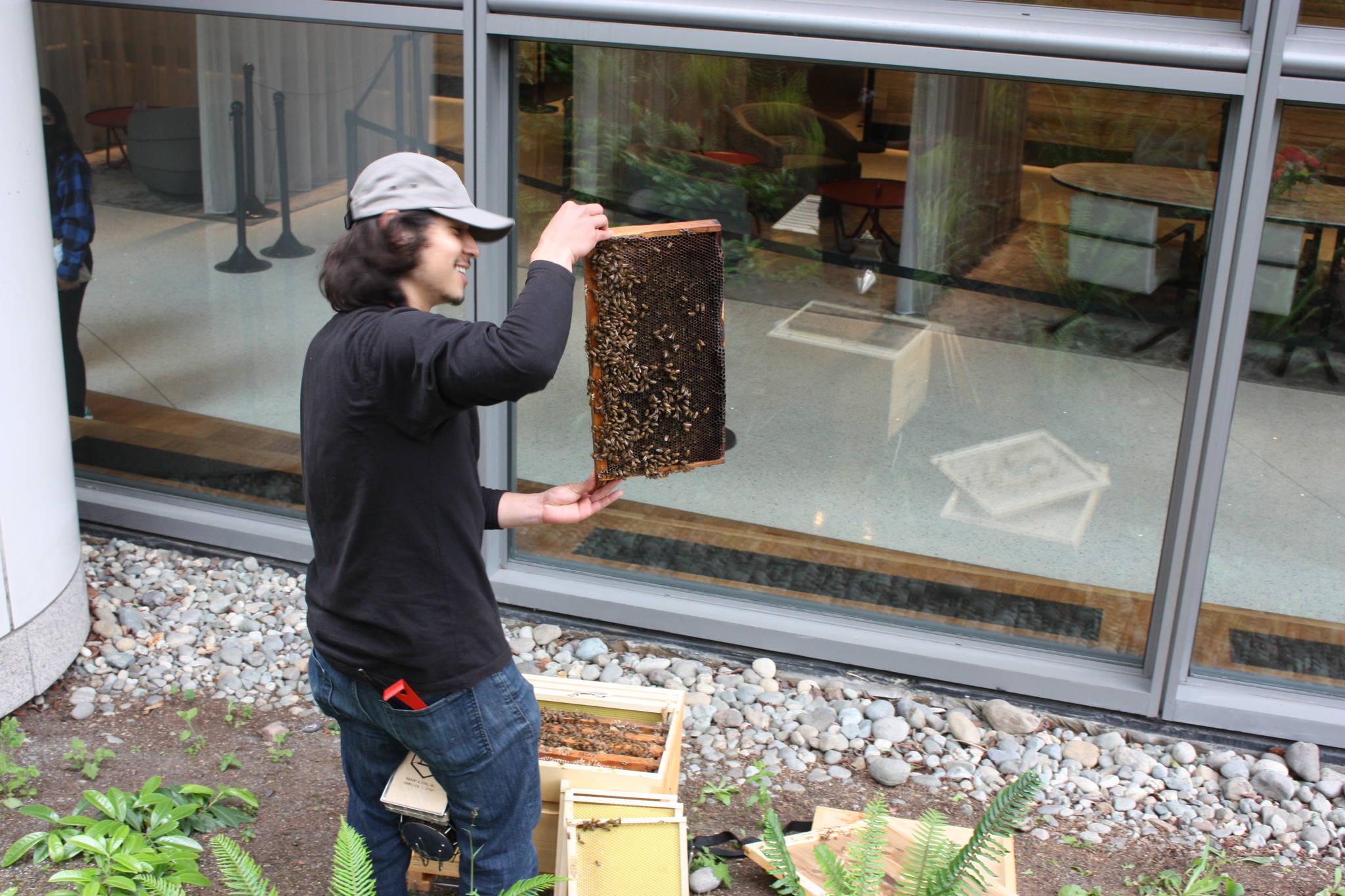
In the background is a Seattle skyscraper, people often walked by to watch Pedro Miola as he worked. (Photo by Cameron Sheppard)
