
Research suggests warmer oceans are killing sea stars in Puget Sound
Published 1:30 pm Saturday, January 30, 2021
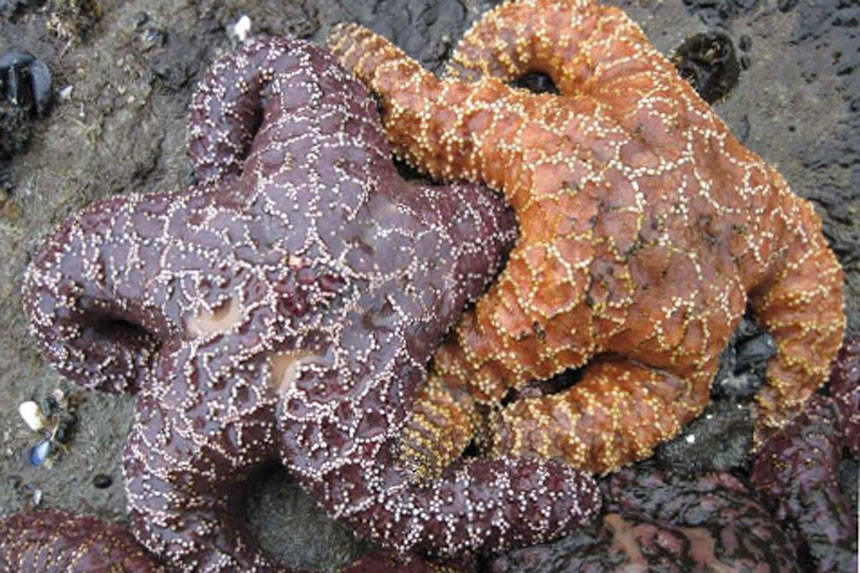
Recent research conducted at Cornell University might help us understand an illness that has decimated sea star populations for nearly a decade.
Melissa Miner, research associate in the Puget Sound for University of California, Santa Cruz, said Sea Star Wasting Syndrome (SSWS) has been confusing scientists and natural observers since it was first documented off the coast of the Olympic National Park around 2013.
People are shocked at how widespread the illness had become, she said, as SSWS has now been observed as far north as Alaska and as far south as Mexico with more than 20 species of echinoderms being affected thus far.
SSWS can be recognized by the lesions, often soft and oozing, on the flesh and tissue of an affected sea star. A sea star with SSWS can waste away in a matter of days as its limbs will eventually fall off.
Miner said SSWS has wiped out 70-100 percent of sea star populations in certain areas. In regions like the Salish Sea and the Puget Sound, she said young sea star populations are not showing recovery.
Sarah Gravem, research associate at Oregon State University, has been an ecological surveyor whose work has helped get the Sunflower Sea Star listed as “critically endangered” by the International Union for Conservation of Nature.
Her study utilized more than 61,000 surveys from across the West Coast and found that Sunflower Sea Star populations had decreased by more than 90 percent globally since the SSWD outbreak with an estimated 100 percent decline in Oregon and a 99 percent decline in Washington.
She said Sunflower Sea Stars used to be “common” and easy to find among beaches and intertidal zones across the West Coast.
“It is fairly clear that [SSWS] is the main driver,” Gravem said. “Without it, Sunflower Sea Stars would not be on the list.”
Gravem said sea stars are a keystone species in their marine ecosystems, meaning they play an important role in controlling and balancing the populations of other marine species.
For example, sea stars are an important predator of the sea urchin, which if unchecked will over-engorge themselves on kelp forests that Gravem said are already unhealthy amid warming water temperatures.
Not only are sea urchins more plentiful as SSWS kills off one of their main predators, but Gravem said the sea urchins also behave boldly and feed more aggressively on growing kelp.
“I don’t think we will see [sea stars] come back for decades,” she said. “And that’s not good for kelp.”
Warmer oceans?
Scientists and researchers have been working to understand the nature of this illness and its potential causes since the beginning of its outbreak.
Coincidentally, the SSWS began at a time where oceanic water temperatures were recorded at record highs. A 2016 study linked increased temperatures with increased symptoms of SSWS and faster rates of death for sea stars.
Warmer water temperatures were shown to exacerbate the effects of SSWS, but researchers like Gravem still believed SSWS was a disease caused by a transmissible pathogen and that warm waters were not the cause of the epidemic, but rather a factor that made it worse.
Cornell researcher Ian Hewson has been studying SSWS and trying to understand its cause for years. Hewson said he is at the point where he is convinced that it is not an infectious disease, and is more closely related to the changing conditions of the ocean.
Hewson admitted that SSWS “looks and smells” like a transmissible pathogenic event, but his experimentation suggests otherwise.
One experiment that he said excluded the possibility of a virus involved injecting the blended tissue of sea stars that had died of SSWS into healthy sea stars to see if they would contract the virus.
Hewson said the healthy sea stars did die, but despite viruses being more pronounced in infected tissues, there was no virus in the sea stars that they could associate with SSWS.
However, Hewson believes a more recent study of his might have helped unlock some understanding of what SSWS could be.
He said that extreme marine weather events beginning in 2013 brought water from deeper parts of the ocean to shallower marine habitats where sea stars were plentiful.
These waters originating from the ocean’s depths are rich with organic nutrients that phytoplankton love, and Hewson said this causes large algal blooms across the coast. Through the respiratory process, algae and phytoplankton release dissolved organic matter that attract microbial cultures.
Hewson said this drastic increase in microbial life creates low-oxygen dead zones not only around the sea stars’ habitat, but also on the surface of their bodies.
Sea stars, which diffuse oxygen through their skin, are left unable to breathe in the low-oxygen environment not only created by the increased microbial life, but also by the increase in water temperatures.
According to Hewson, the lesions and deterioration of tissues on the wasting sea stars are likely caused as the sea stars are deprived of enough oxygen for their metabolism to properly function.