Kent-based organization expands support for people with disabilities
Published 1:30 am Friday, May 1, 2026
When the Fernandez family sat down for meetings to discuss their son Junior’s autism support, his 11-year-old sister spoke up. With no professional interpreter, Junior’s older sister, Yareli, became the bridge between the English-speaking administrators and her Spanish-speaking family.
Yareli Fernandez was left to translate medical and educational jargon beyond her understanding.
“The administrator talked so quickly that it was difficult to keep up,” she said.
Junior’s mom, who spoke on the condition of anonymity, said it was a hard day.
“We have to fully understand,” she said.
In Kent, where more than 130 languages are spoken, the Fernandez family’s four-month wait for medical care reveals the language hurdles that non-English-speaking families face. While investigations by The Seattle Times have uncovered how language barriers leave special education families lacking support, Kent-based organization Open Doors for Multicultural Families is working to help clear the path forward.
Inside its current Russell Road office building, Open Doors for Multicultural Families provides support groups to ensure families of children with intellectual and developmental disabilities are not alone.
To Andrea Kassa, ODMF’s director of development, bridging the gap is more than providing interpreters. I’s about making spaces for families to navigate a system that was never built for them.
“You’re facing barriers for systems that were not created for people, not for everyone in our community,” Kassa said. “They are complex. They require high navigation skills. They require that you constantly be advocating.”
For families like the Fernadezes, walking into the ODMF offices begins with an overwhelming amount of medical records and school evaluations, only to face what Kassa describes as a “mountain” of English terminology that hinders the process that helps their children access services.
The challenges of navigating the system also shape the students it’s meant to serve, said 24-year-old Khalid Sirad. Sirad spent his college career pushing through the education system as an autistic person, he said. By working twice as hard than his classmates, he searched for resources at his university that could support his academic needs, he said.
“I was at a massive disadvantage,” Sirad recalled, “which is why I did everything in my power to ensure that I was always in the game.”
To bridge these gaps, ODMF established a team of navigators to serve as both translators and advocates for Sirad. This structure is rooted in the history of Executive Director Ginger Kwan, who founded the organization after navigating the same confusing systems as an immigrant mother.
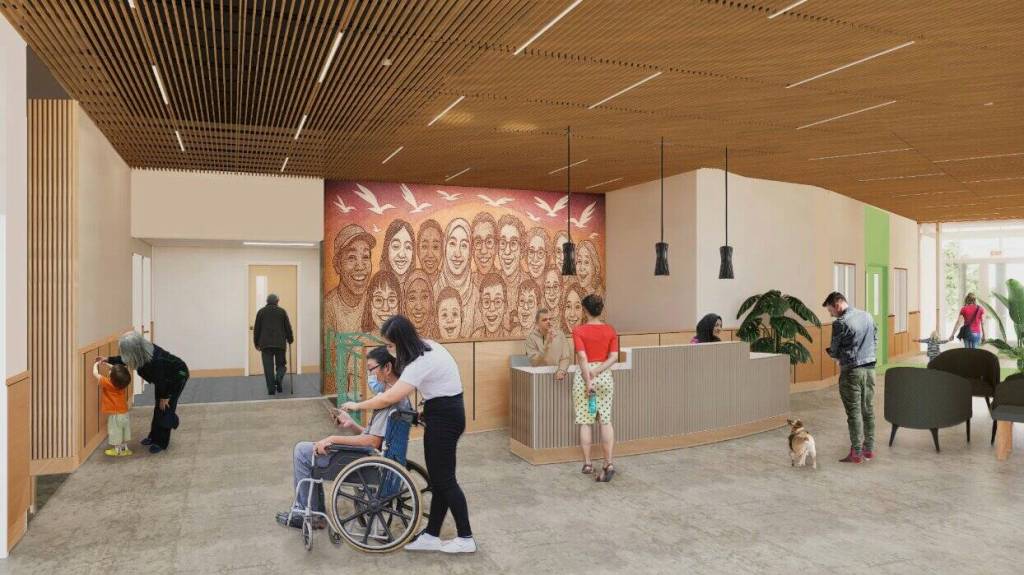
While the navigation program addresses immediate language barriers, ODMF’s long-term goal is to provide secure housing for the community. To build toward this, ODMF is partnering with Mercy Housing Northwest and Lotus Development Partners to create an affordable, inclusive apartment building that families can call home on the West Hill in Kent. According to the project’s development plan, the Multicultural Village, a $100 million housing community, broke ground in early 2026. Dedicated to people with disabilities, this project provides affordable housing, an early learning center, and support responsive for cultural and linguistic needs, according to ODMF.
To sustain this expansion, ODMF is shifting its financial strategy to move away from relying on government grants, Kassa said. ODMF’s goal is to build a “diversified funding portfolio,” by engaging with local foundations, corporations, and individual donors to support the Village’s specialized programs of inclusion and belonging, Kassa said.
“We really want to make sure that we can root ourselves in the community and have that stability moving forward,” Kassa said.
This stability also depends on increasing access to state-funded Developmental Disabilities Community Services waivers, another key goal for the organization that allows individuals to receive services through Medicaid programs in their community. According to ODMF’s leadership, these funds are essential for families because they cover community engagement and respite care that insurance does not cover. By securing this support, ODMF aims to ensure families moving into the Multicultural Village will be receiving the necessary care for their children, Kassa said.
For the Fernandez family, who are thinking about applying to move in, the Multicultural Village represents a long-awaited home. After years of navigating systems that were trying to “fix” Junior rather than understand him, the 2026 project is the resource his mom wishes had existed sooner.
The family would have supported Junior in navigating his disability in that supportive environment, Junior’s mom said: “We would have avoided a lot of mistakes because there weren’t any guidelines and resources to support him through transitions in his life.”
–
University of Washington’s News Lab operates as a local news bureau staffed by advanced journalism and public interest communication students.